Decentralized and small-scale wastewater purification infrastructure has entered an era of rapid technological convergence. For global developers, municipal engineers, and environmental consultants, sourcing a CE Certification Domestic Sewage Treatment Plant is no longer merely a regulatory check-box, but a critical risk-management mandate. In jurisdictions governed by European Standard EN 12566 (specifically EN 12566-3 for packaged and/or site-assembled domestic wastewater treatment plants), CE marking stands as the absolute benchmark for structural reliability, watertight performance, and biochemical purification efficiency.
This whitepaper outlines the structural, biological, and engineering paradigms that dictate modern wastewater design. By auditing biological kinetics, mechanical durability, and international environmental directives, we provide the foundational data that municipal and commercial procurement officers require to secure long-term capital investments. In modern wastewater management, a product's authority is validated not by self-declaration, but through accredited third-party mechanical stress-testing and documented pollutant reduction rates.
Strict validation under European Standard EN 12566-3 ensures total environmental, mechanical, and biological compliance.
Engineered to withstand ground settlement, hydraulic pressures, and geological shifts without structural fatigue.
Corrosion-resistant materials (FRP/HDPE) designed to provide a continuous operating lifespan exceeding 25 years.
Decentralized sewage processing is undergoing a paradigm shift. Globally, localized treatment plants are replacing costly centralized piping extensions. According to the United Nations Sustainable Development Goal 6 (SDG 6), clean water and sanitation demand decentralized systems that process blackwater and greywater close to the source, eliminating massive pumping costs. In Europe, the Green Deal and the newly revised Urban Wastewater Treatment Directive impose strict nitrogen and phosphorus discharge regulations. Simultaneously, the North American EPA guidelines and localized water boards mandate certified treatment before soil infiltration or surface-water disposal.
These macroeconomic drivers have accelerated the adoption of modular, pre-assembled sewage plants. By deploying automated technologies, developers can achieve municipal-grade effluent standards within a self-contained, low-footprint unit. Below is a comparative overview of how regional regulations influence decentralized design parameters:
| Geographic Region | Primary Certification Standard | BOD₅ Discharged Limits | Nutrient Removal Focus |
|---|---|---|---|
| European Union | EN 12566-3 / CE Mark | < 20 mg/L (frequently < 15 mg/L) | Strict Nitrification & Total Phosphorus Limits |
| North America | NSF/ANSI Standard 40 & 245 | < 25 mg/L (highly localized) | Total Nitrogen Reduction to < 10 mg/L |
| Asia-Pacific | GB 18918-2002 / ISO 23045 | < 10 to 20 mg/L | Chemical Oxygen Demand (COD) & Ammonia Nitrogen |
| Latin America & MEA | Regional Adaptations of ISO / EN | < 30 mg/L | Coliform Bacteria & Pathogen Disinfection |
Qingdao Cherish operates as an integrated industry and trade enterprise dedicated to the design, manufacture, and global supply of intelligent infrastructure, industrial processing, and environmental engineering systems. With robust engineering capabilities, modern manufacturing resources, and extensive international project experience, we deliver reliable systems that support modern urban infrastructure and industrial development worldwide.
Founded by a team of experienced engineers and international business professionals, the company was established with a clear mission: to provide efficient, durable, and sustainable equipment solutions through continuous innovation, precision manufacturing, and customer-focused service. From initial concept design and technical planning to production, delivery, and after-sales support, we ensure consistent quality and dependable performance throughout every project lifecycle.
Through our dedicated Industrial Equipment Division, we combine advanced automation with durable mechanical engineering to deploy cutting-edge wastewater treatment plants, powder coating lines, and finishing systems that meet international regulatory and environmental standards.
Become a Strategic Partner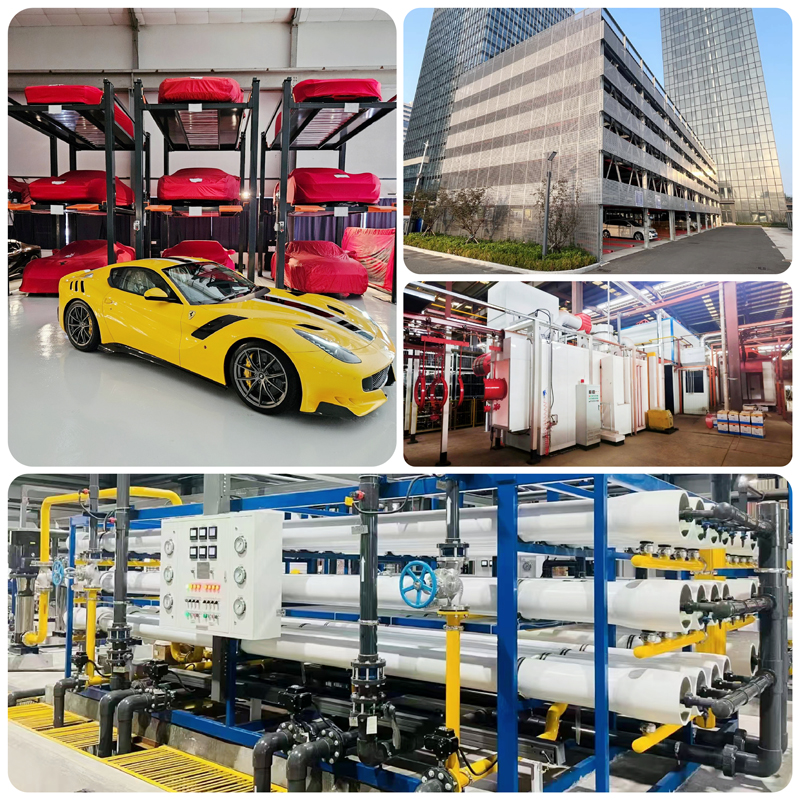
By splitting our operations into two specialized divisions, we provide focused engineering expertise that addresses distinct infrastructure challenges worldwide.
Focused on the development and production of car parking lifts, automated parking systems, car stackers, and customized vertical parking solutions. Engineered to maximize space utilization in high-density residential and commercial real estate developments worldwide.
Delivering complete powder coating systems, electrostatic ovens, and certified packaged wastewater and sewage treatment plants. We combine durable structural engineering with advanced biological and mechanical processes to meet the toughest environmental discharge parameters.

Our Parking Systems Division addresses critical spatial constraints in modern urban architecture. By leveraging vertical car stackers, pit-installed parking platforms, and complex multi-level puzzle parking designs, we allow urban planners and private developers to triple their parking footprint without expanding structural outlines. Whether utilizing a double level two-post configuration or deep-pit car scissor systems, safety, CE compliance, and smooth hydraulic control remain paramount across our global project installations.
Our Industrial Equipment Division delivers engineered solutions for environmental compliance and surface preparation. This includes low-VOC electrostatic powder coating lines with automatic recovery systems, and integrated wastewater treatment systems designed to process industrial and municipal waste streams. By bridging the gap between mechanical engineering and chemical process design, we help manufacturers reduce operating overhead while keeping emissions within regulatory limits.
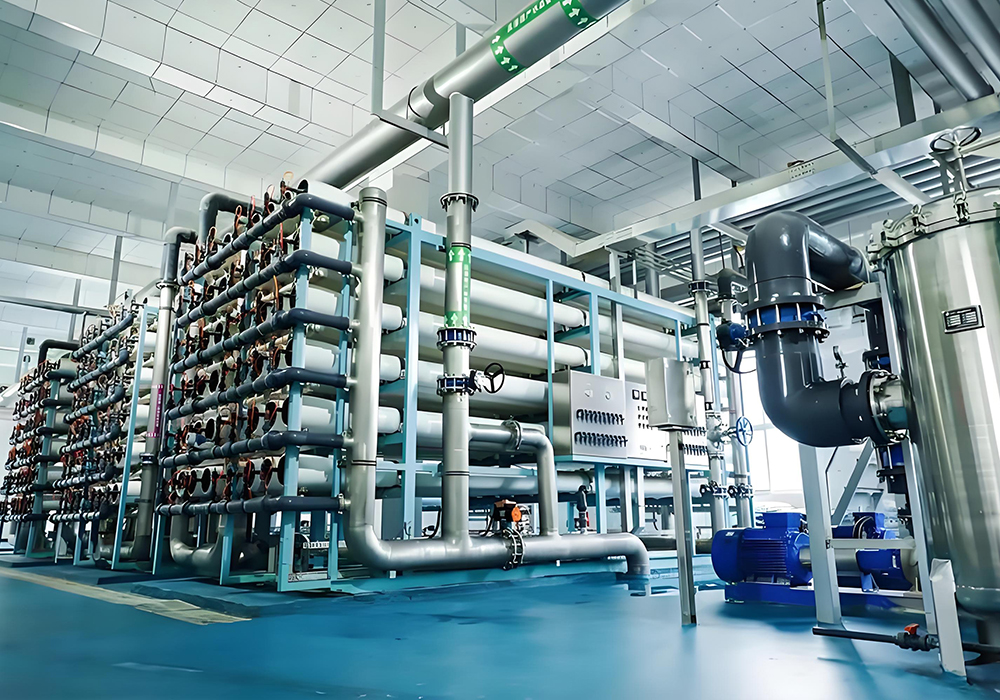
Packaged domestic sewage treatment plants leverage advanced biological processes to transform raw effluent into safe discharge-grade water. Under standard operation, the process is divided into three distinct phases:
Raw sewage enters the primary chamber, where heavy solids sink to the bottom as sludge, and grease floats to the top. Anaerobic digestions begins, breakdown complex organic compounds.
Wastewater enters the aeration chamber, containing high-density carrier media. Aerobic bacteria grow on the media surface, digesting dissolved organic matter under constant, oxygenated air flow.
Any remaining biological flock settles in the final clarification tank. The purified effluent is then discharged safely into the environment, or routed for tertiary filtration and irrigation reuse.
CE-certified domestic plants are validated against performance metrics designed to guarantee purification under extreme temperature and hydraulic loads. Our plants are engineered to achieve high pollutant reduction rates, ensuring compliance with strict environmental discharge standards:
| Pollutant Parameter | Typical Influent Concentration | Purified Effluent Concentration | Overall Reduction Efficiency |
|---|---|---|---|
| Biochemical Oxygen Demand (BOD₅) | 300 - 350 mg/L | < 15 mg/L | ≥ 95% |
| Chemical Oxygen Demand (COD) | 600 - 750 mg/L | < 50 mg/L | ≥ 92% |
| Total Suspended Solids (TSS) | 300 - 400 mg/L | < 15 mg/L | ≥ 96% |
| Ammonia Nitrogen (NH₄-N) | 35 - 55 mg/L | < 5 mg/L | ≥ 90% |
| Total Phosphorus (TP) (with chemical dosing) | 8 - 12 mg/L | < 1.5 mg/L | ≥ 85% |
No two installation sites are identical. Engineering domestic sewage solutions requires a deep understanding of localized geology, seasonal temperature fluxes, and peak load behaviors. The following installation scenarios illustrate the versatility of CE-certified sewage plants:
Residential landscapes demand ultra-quiet operation and zero odor emission. By using subterranean, high-density polyethylene (HDPE) or fiber-reinforced plastic (FRP) tanks, the system remains hidden. Aeration pumps are housed in soundproof kiosks, and biological activity is optimized to adjust to fluctuating tourist populations without experiencing biomass die-off during low seasons.
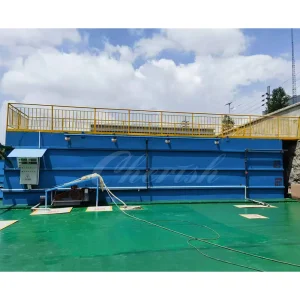
For remote developments, containerized integrated sewage treatment units represent the optimal plug-and-play solution. These systems are pre-assembled within 20ft or 40ft standard ISO container frames, allowing for simple transport, rapid installation, and easy relocation once the project reaches completion.
Highway rest stops and commercial plazas experience extreme surge flows during specific hours. An integrated equalization tank is placed upstream of the biological reactor to balance high surge volume and neutralize cleaning chemicals, keeping the bacterial colony stable.
Modern decentralized treatment is shifting toward automation and minimal maintenance. Our technology roadmap focuses on three main developments:
Integrating smart sensors that monitor dissolved oxygen (DO), pH, oxidation-reduction potential (ORP), and sludge levels in real-time, sending data directly to cloud-based management systems.
Reducing operational carbon footprint by using solar panels and battery banks to power air blowers and transfer pumps, enabling off-grid installations.
Developing high-surface-area carriers that support denser bacterial colonies, maximizing degradation performance while keeping footprint minimal.
Integrating mechanical safety with industrial design remains key to our product developments. Below are details on our equipment offerings:
The Triple-Level Parking Lift is engineered to maximize vertical storage space. Designed to accommodate both sedans and SUVs, this lift offers a practical solution for those seeking efficient car storage. Whether you’re a homeowner looking to make the most of a limited garage or a business looking to optimize parking in a commercial setting, this lift makes parking and retrieval easy and convenient. With its durable construction and space-saving design, the Triple-Level Parking Lift is ideal for any environment where parking space is at a premium. Say goodbye to cramped spaces and hello to smart, effortless parking!
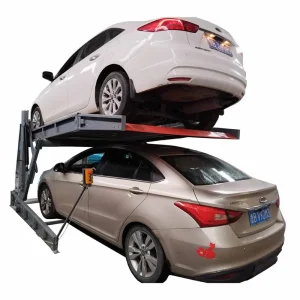
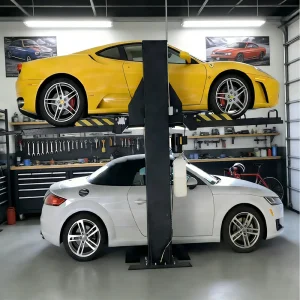
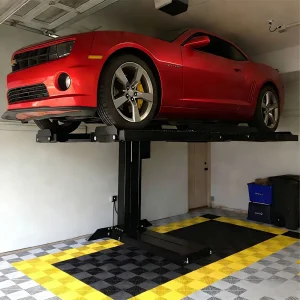
The Double-Level 2 Post Car Parking Lift offers loading capacities of 2300kg or 2700kg, catering to your specific parking needs. With a maximum lifting height of 2100mm, it efficiently accommodates most vehicles while optimizing available space. The height of the columns can vary, making it important to consider ceiling height for indoor installations. This lift is ideal for both residential and commercial applications, providing a reliable solution for parking two vehicles in the same footprint. Make the most of your space without compromising on convenience or safety.
The Tilting Parking Lift is designed for spaces with low ceilings, such as residential basements. Its design allows the platform to tilt at an angle, optimizing parking in tight spaces. With an adjustable lifting height ranging from 1400mm to 1800mm, it offers flexibility to suit different vehicle sizes and parking requirements. With a maximum loading capacity of 2000kg, this lift ensures safe and efficient storage for your car. Ideal for both residential and commercial applications, the Tilting Parking Lift provides a space-saving, practical solution for parking in areas where conventional vertical lifts may not fit.
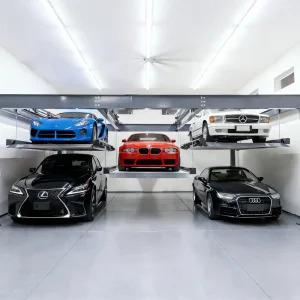
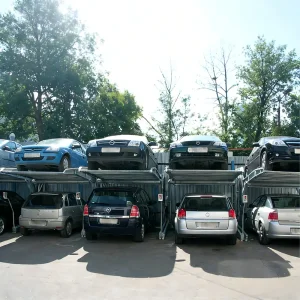
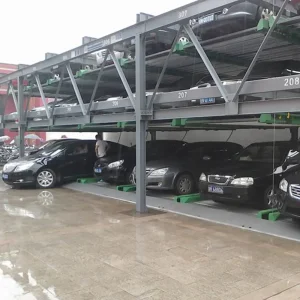
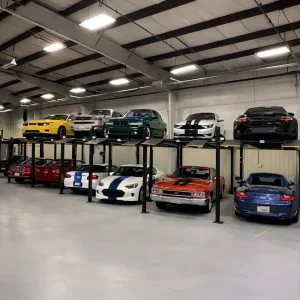
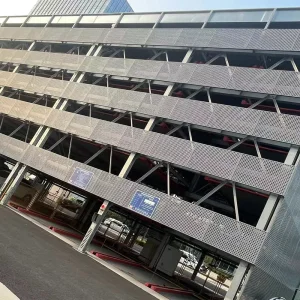
The Multi-Level 2-6 Levels Automatic Puzzle Parking System is a cost-effective, space-saving automated parking solution. Designed for both indoor and outdoor use, this system maximizes parking space by stacking and sliding vehicles dynamically. It is fully customizable to fit your available land area, ensuring efficient use of space. The system can accommodate a wide range of vehicles, including sedans and SUVs, making it suitable for most cars. With its automated operation and space-saving design, the Multi-Level Puzzle Parking System offers a reliable and practical solution for both residential and commercial parking needs.
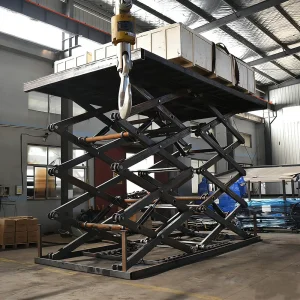
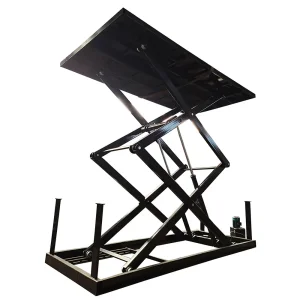
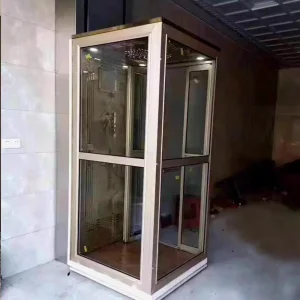
The Elevator with Double Rails for cars or cargo is a customizable solution designed to fit your available land space. It can be used both as a freight elevator and a car elevator, offering flexibility for various vertical transport applications. One of its key features is that it does not require a deep foundation pit, making it easier to install in existing buildings, workshops, or car showrooms. With its sturdy construction and efficient hydraulic operation, this elevator is perfect for transporting vehicles or heavy cargo between different levels. It’s an ideal solution for businesses that require reliable and safe vertical transportation.
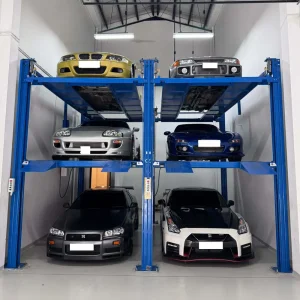
The Quad-Level Car Stacker, a 4-post parking lift, is designed to store up to 4 cars vertically, offering a highly efficient space-saving solution. Utilizing the same basic framework, it can also be configured as a 3-level system, providing flexibility based on site constraints. This mechanical parking lift is built for durability, capable of handling both sedans and SUVs. It can be installed indoors or outdoors, making it ideal for residential or commercial spaces where maximizing parking capacity is essential. Strong and reliable, the Quad-Level Car Stacker is perfect for efficient and safe vehicle storage, optimizing your available space.
With the acceleration of urbanization and the rapid development of industrialization, sewage or waste water treatment plants have become critical components of environmental protection efforts. We are committed to providing efficient and reliable diversified solutions, including industrial wastewater and domestic sewage recycling, water reuse, and zero-discharge treatment systems; full membrane and reverse osmosis desalination systems; as well as pre-treatment filtration equipment for seawater desalination, pure water, and ultra-pure water. Through innovative technologies, we aim to support sustainable water resource management and contribute to global environmental protection.
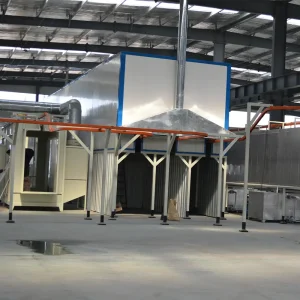
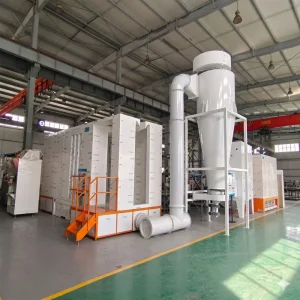
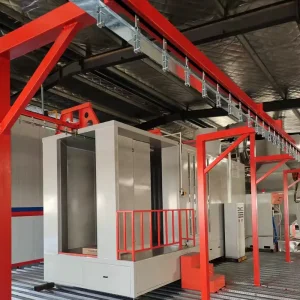
Powder coating lines represent one of the most advanced coating technologies in the world today. Their primary advantage lies in emitting little to no volatile organic compounds (VOCs). Compared to traditional liquid coatings, powder coatings can form more uniform and thicker layers without issues like dripping or sagging. Additionally, over spray from powder coatings can be efficiently recycled, achieving nearly 100% material utilization and significantly reducing waste. Powder coating lines generate less hazardous waste and have lower capital investment and operational costs compared to traditional liquid coating lines. Powder-coated surfaces exhibit superior consistency in appearance between horizontal and vertical surfaces, and they can easily achieve a variety of special effects that are difficult to replicate with other coating processes.
We have successfully completed numerous projects worldwide with our parking lifts and industrial systems, serving customers across the USA, Spain, Germany, Australia, the UK, Italy, Mexico, Colombia, Guatemala, France, Serbia, Myanmar, and beyond. Depending on local installation environments, we offer customized surface treatments, including powder coating and hot-dip galvanizing, to ensure durability against coastal salt spray, industrial air pollutants, and extreme weather.
 Cherish