Industrial and structural machinery built to European CE safety standards
The paradigm shift in modern surface finishing and high-efficiency industrial deposition
In the current macroeconomic landscape, global industrial manufacturing is undergoing a structural transition toward decarbonization, high automation, and strict environmental compliance. Within this framework, electrostatic powder coating lines have emerged as a critical technology for surface finishing. Unlike legacy liquid solvent painting lines, which emit significant volumes of volatile organic compounds (VOCs) and yield high waste ratios, electrostatic powder coating utilizes dry, solvent-free polymer resins that are electrostatically charged and applied to grounded substrates.
This physical interaction relies on Coulomb's Law: particles are projected from an applicator nozzle where they receive a high-voltage, low-amperage negative or positive charge (typically via Corona charging or Tribo charging methods). The target workpiece is electrically grounded, creating an electrostatic field that pulls the paint particles uniformly to its surface. This process eliminates dripping, runs, and sagging while enabling paint reclamation rates close to 98% through advanced recovery cyclones.
Connecting heavy machinery design with global execution capabilities
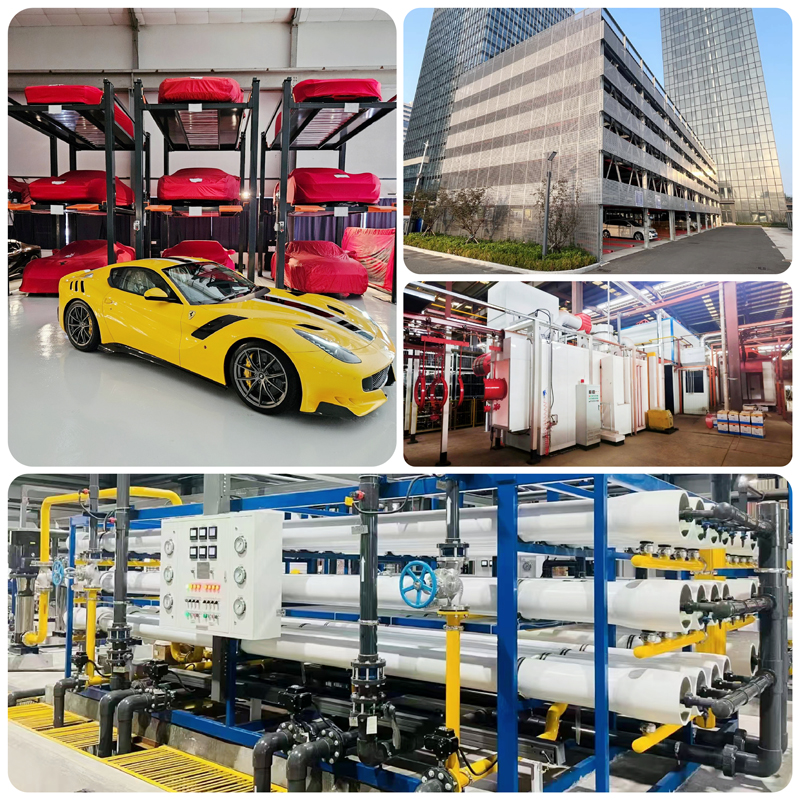
Qingdao Cherish is an integrated industry and trade enterprise dedicated to the design, manufacture, and global supply of intelligent parking equipment and industrial processing solutions. With strong engineering capabilities, modern manufacturing resources, and extensive international project experience, we deliver reliable systems that support modern urban infrastructure and industrial development worldwide.
Founded by a team of experienced engineers and international business professionals, the company was established with a clear mission: to provide efficient, durable, and sustainable equipment solutions through continuous innovation, precision manufacturing, and customer-focused service. From initial concept design and technical planning to production, delivery, and after-sales support, we ensure consistent quality and dependable performance throughout every project lifecycle.
Our Parking Systems Division focuses on the development and production of car parking lifts, automated parking systems, car stackers, and customized parking solutions. Designed to maximize space utilization and operational efficiency, our systems are widely applied in residential buildings, commercial facilities, hospitals, and urban developments. Through continuous engineering innovation and strict quality control, we deliver safe, reliable, and space-saving parking solutions tailored to global project requirements.
Our Industrial Equipment Division provides advanced powder coating lines and sewage treatment plant solutions for industrial applications. These systems are engineered to improve production efficiency, surface finishing quality, and environmental sustainability. By integrating automation technology with durable system design, we help clients optimize manufacturing processes while meeting modern environmental standards and regulatory requirements.
Regulatory compliance, health & safety frameworks, and market access
For industrial machinery operating in the European Economic Area (EEA) and other highly regulated international markets, CE Certification (Conformité Européenne) is a critical indicator of conformity with safety, health, and environmental protection standards. An electrostatic powder coating line involves complex systems, including pressurized air, high-voltage electrostatic charging, thermal curing ovens burning natural gas or using high-power electrical resistors, and high-velocity powder recovery ducts. Without comprehensive CE engineering compliance, these lines present significant industrial hazards, notably explosive dust hazards (addressed under the ATEX directive).
A CE-certified powder coating line must strictly adhere to several directives:
Data-driven performance matrix for manufacturing decision-makers
| Performance Parameter | Electrostatic Powder Coating Line (CE Standard) | Traditional Liquid Paint Lines | Operational Impact |
|---|---|---|---|
| Material Transfer Efficiency | 95% – 98% (with cyclone & cartridge recovery) | 30% – 60% (due to overspray loss) | Reduces raw material consumption by up to 50% |
| Volatile Organic Compounds (VOC) | Zero VOCs (dry powder formulations) | High (requires solvent extraction and RTO thermal oxidizers) | Reduces environmental permitting costs and emissions tax |
| Film Thickness Capabilities | 40µm to 150µm in a single pass without runs | 15µm to 40µm per coat (multiple applications required) | Faster process cycle times with higher thickness profiles |
| Energy Consumption Profile | Medium-High (requires elevated curing temperatures: 180-200°C) | Medium (requires flash-off zones and lower temp baking) | Optimized by heat exchangers and smart conveyor speeds |
| Waste Disposal Classification | Non-hazardous dry waste (reclaimable overspray) | Hazardous chemical sludge (requires specialized disposal) | Lower operational compliance and disposal overheads |
| Curing / Cross-linking Duration | 10 – 20 minutes directly after application | Hours of drying, solvent flash-off, and multi-stage baking | Increases overall production throughput and minimizes WIP inventory |
Engineering stages from surface preparation to final cross-linking
Surface preparation dictates coating adhesion. Modern lines use multi-stage spray pretreatment tunnels. Stages include hot alkaline degreasing to remove mill oils, water rinses, acid pickling (for rust extraction), and conversion coatings (such as zinc phosphating or silane-based nanotechnology). These chemical stages create micro-roughness on metallic substrates, enhancing physical and chemical bonding.
Following chemical pretreatment, the workpieces proceed to a convection drying oven. Retained moisture inside seams or complex profiles will vaporize during final curing, causing pinholes, blistering, and weak spots in the polymer coating. Operating at 110°C to 140°C, these drying ovens use high-velocity air circulation to dry all surfaces before coating.
The application booth uses automatic spray guns mounted on reciprocators, supplemented by manual touch-up stations. Dry powder is fluidized by low-pressure air in a hopper and pumped to the guns. As it exits, a corona electrode generates a charge (typically up to -100kV), creating an electrostatic field that attracts the powder to the grounded workpiece.
To achieve high material efficiency, the booth's exhaust system extracts overspray powder. A high-efficiency multi-cyclone separator uses centrifugal force to separate usable powder from air. Fine particles are captured by secondary cartridge filters, while recovered powder is sieved and recycled back into the fluidizing hopper for reuse.
Once coated, the parts enter the curing oven, typically operating at 180°C to 200°C for 15 to 20 minutes. Here, the thermoplastic or thermosetting powder melts, flows, and undergoes chemical cross-linking. This process forms a highly durable polymer matrix resistant to impacts, chemical exposure, UV degradation, and corrosion.
Continuous lines rely on specialized conveyor systems. Monorail overhead conveyors, power-and-free systems, or floor conveyors transport parts through the line. The conveyor speed must be synchronized with the pretreatment, spray booth, and curing oven dimensions to match the required cycle times and thermal profiles.
How geographic regulations and industrial conditions shape equipment configuration
In North America, high labor costs and strict EPA emissions standards drive demand for automated powder coating lines. Automotive, agricultural machinery, and heavy industrial manufacturers prioritize integration with programmable logic controllers (PLCs) and automated line monitoring. Heavy-duty 4-post parking lifts and industrial equipment are often finished on these high-capacity lines to withstand outdoor weathering and road salts.
The European market is defined by strict CE compliance, ATEX safety directives, and high energy costs. Operators prioritize energy efficiency, using heat-recovery exchangers on gas-fired curing ovens and switching from traditional corona guns to energy-efficient tribo guns. These systems are used to coat architectural aluminum extrusions, automotive parts, and logistics equipment to Qualicoat and GSB standards.
In developing regions, rapid infrastructure expansion and urban growth drive the demand for versatile, cost-effective powder coating solutions. Companies seek modular systems that can scale from manual operations to fully automated, high-output production. Common applications in these regions include structural steel, electrical enclosures, residential metalwork, and automotive aftermarket components.
Industry 4.0, smart diagnostics, and eco-friendly innovations
The powder coating industry is transitioning into the Industry 4.0 era, characterized by data integration, artificial intelligence, and predictive maintenance. Key developments shaping the future of this sector include:
Integrating pretreatment discharge management with ecological standards
A critical phase of any electrostatic powder coating line is the chemical pretreatment stage, which generates process wastewater containing oils, heavy metals (such as zinc, iron, or manganese phosphates), and acidic or alkaline chemicals. To comply with municipal environmental guidelines and achieve true operational sustainability, these factories must integrate dedicated wastewater treatment plants.
Advanced Solutions for Wastewater Treatment and Sustainable Water Resource Management:
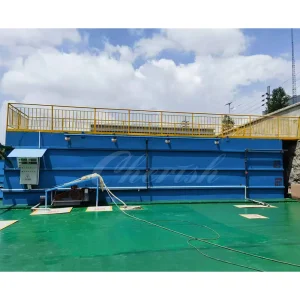
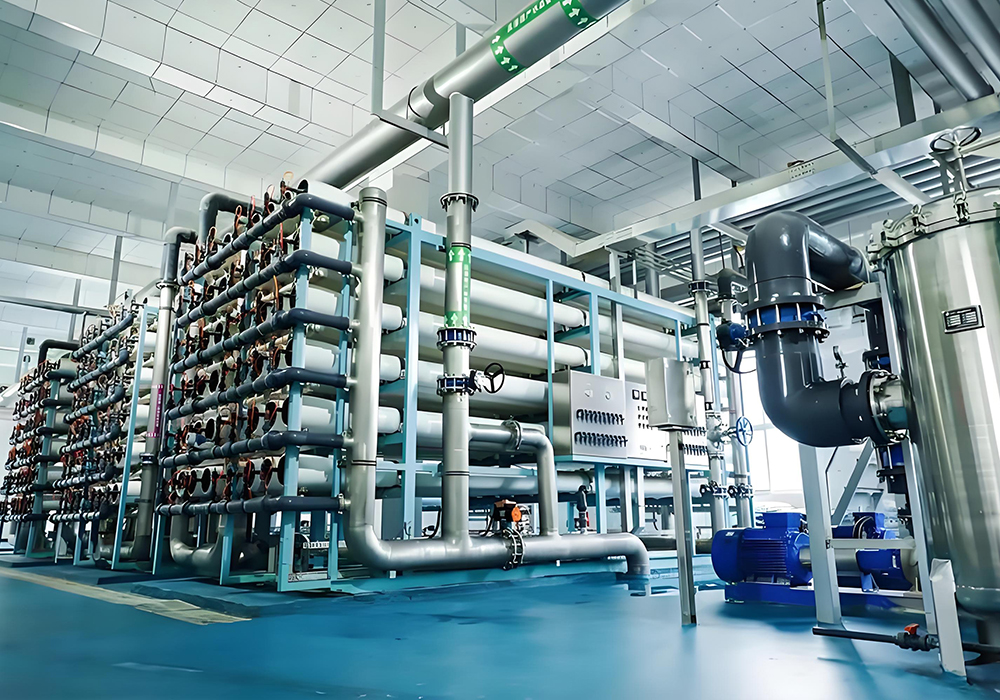
With the acceleration of urbanization and the rapid development of industrialization, sewage or waste water treatment plants have become critical components of environmental protection efforts. We are committed to providing efficient and reliable diversified solutions, including industrial wastewater and domestic sewage recycling, water reuse, and zero-discharge treatment systems; full membrane and reverse osmosis desalination systems; as well as pre-treatment filtration equipment for seawater desalination, pure water, and ultra-pure water. Through innovative technologies, we aim to support sustainable water resource management and contribute to global environmental protection.
Real-world applications of space-saving structures and surface finishing systems
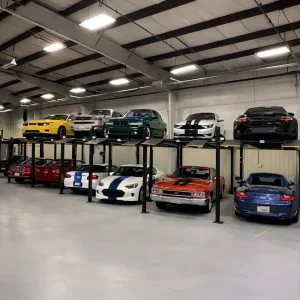
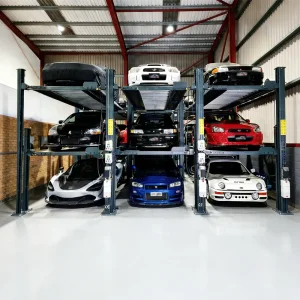
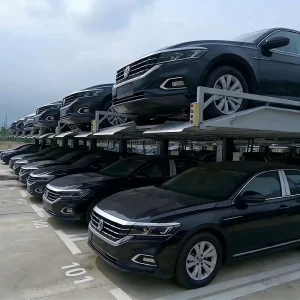
The Triple-Level Parking Lift is a game-changer for maximizing parking space. Designed to accommodate both sedans and SUVs, this lift offers a practical solution for those seeking efficient car storage. Whether you’re a homeowner looking to make the most of a limited garage or a business looking to optimize parking in a commercial setting, this lift makes parking and retrieval easy and convenient. With its durable construction and space-saving design, the Triple-Level Parking Lift is ideal for any environment where parking space is at a premium. Say goodbye to cramped spaces and hello to smart, effortless parking!
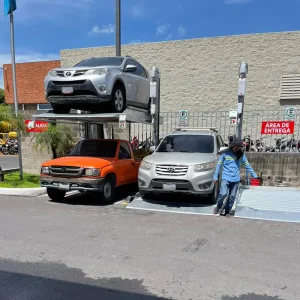
The Double-Level 2 Post Car Parking Lift offers different loading capacities of 2300kg or 2700kg, catering to your specific parking needs. With a maximum lifting height of 2100mm, it efficiently accommodates most of vehicles while optimizing available space. The height of their columns may vary, so it’s important to consider the ceiling height, especially if you plan to install it indoors. This lift is ideal for both residential and commercial applications, providing a reliable solution for parking two vehicles in the same footprint. Make the most of your space without compromising on convenience or safety.
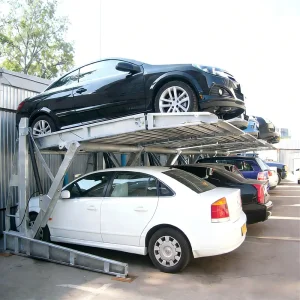
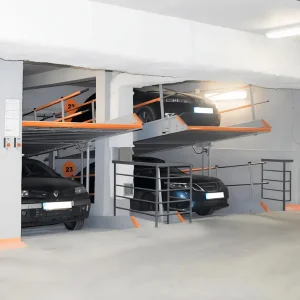
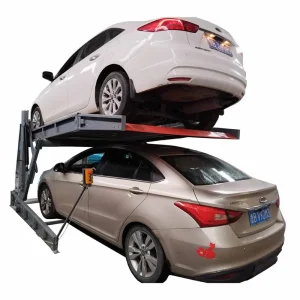
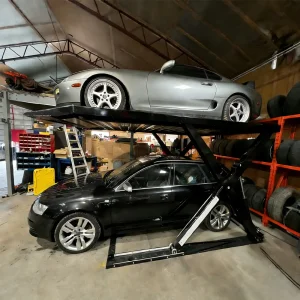
The Tilting Parking Lift is the perfect solution for spaces with low ceilings, such as basements. Its unique design allows the platform to tilt at an angle, optimizing parking in tight spaces. With an adjustable lifting height ranging from 1400mm to 1800mm, it offers flexibility to suit different vehicle sizes and parking requirements. With a maximum loading capacity of 2000kg, this lift ensures safe and efficient storage for your car. Ideal for both residential and commercial applications, the Tilting Parking Lift provides a space-saving, practical solution for parking in areas where conventional lifts may not fit.
The Quad-Level Car Stacker, a 4-post parking lift, is designed to store up to 4 cars vertically, offering a highly efficient space-saving solution. With the same structure, it can also be configured as a 3-level system, providing flexibility based on your needs. This mechanical parking lift is built for durability, capable of handling both sedans and SUVs. It can be installed indoors or outdoors, making it ideal for residential or commercial spaces where maximizing parking capacity is essential. Strong and reliable, the Quad-Level Car Stacker is perfect for efficient and safe vehicle storage, optimizing your available space.
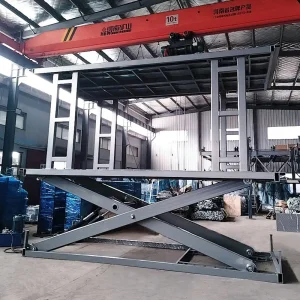
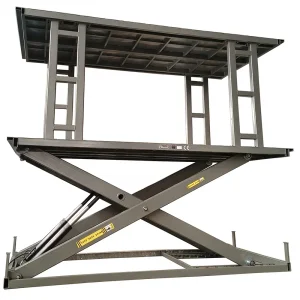
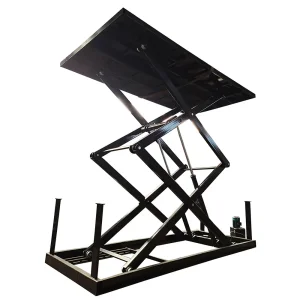
The Underground Scissor Lift with double decks is a customized solution designed to fit your specific pit size. This innovative lift allows cars to be hidden underground, providing a sleek and space-saving solution, especially suited for villa yards. Popular in Australia, this lift maximizes parking space while keeping your vehicles discreetly stored. Its design can be tailored to your preferences, allowing for customization in terms of decoration and functionality. With its smooth operation and efficient use of space, the Underground Scissor Lift offers both practicality and aesthetic appeal, making it ideal for luxury homes or modern properties.
Powder coating lines represent one of the most advanced coating technologies in the world today. Their primary advantage lies in emitting little to no volatile organic compounds (VOCs). Compared to traditional liquid coatings, powder coatings can form more uniform and thicker layers without issues like dripping or sagging. Additionally, over spray from powder coatings can be efficiently recycled, achieving nearly 100% material utilization and significantly reducing waste. Powder coating lines generate less hazardous waste and have lower capital investment and operational costs compared to traditional liquid coating lines. Powder-coated surfaces exhibit superior consistency in appearance between horizontal and vertical surfaces, and they can easily achieve a variety of special effects that are difficult to replicate with other coating processes.
We have successfully completed numerous projects worldwide with our parking lifts, serving customers across the USA, Italy, Mexico, Colombia, Guatemala, France, Serbia, and beyond. Our lifts are versatile, with some clients using them outdoors and others installing them indoors, depending on their needs. To ensure durability and aesthetic appeal, we offer customizable surface treatments, including powder coating and galvanizing, based on customer preferences. Whether for residential or commercial use, our two-post parking lifts provide a reliable, efficient, and tailored solution for maximizing parking space in various environments worldwide.
The 3-Level Parking Lift, a popular 4-post lift, is used worldwide in countries like Spain, Myanmar, the USA, Australia, the UK, Germany, and many more. This versatile lift brings immense convenience, acting as a great helper for car storage. Designed for indoor use, it maximizes vertical space, making it ideal for homes or businesses with limited parking capacity. Whether you need to store a sedan or an SUV, the 3-Level Parking Lift can accommodate both, depending on your needs. With its space-saving design and reliable performance, it offers a perfect solution for efficient vehicle storage.
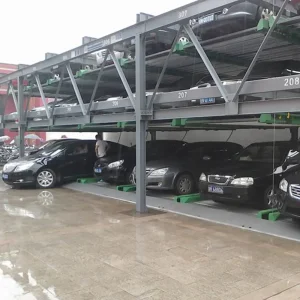
The Multi-Level 2-6 Levels Automatic Puzzle Parking System is a highly popular and cost-effective solution compared to other automatic parking systems. Designed for both indoor and outdoor use, this system maximizes parking space by stacking vehicles in multiple levels. It is fully customizable to fit your available land area, ensuring efficient use of space. The system can accommodate a wide range of vehicles, including sedans and SUVs, making it suitable for most cars. With its automated operation and space-saving design, the Multi-Level Puzzle Parking System offers a reliable and practical solution for both residential and commercial parking needs.
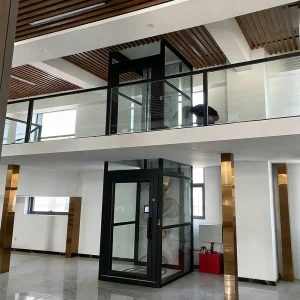
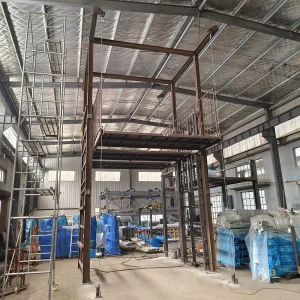
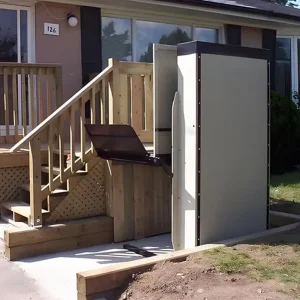
The Elevator with Double Rails for cars or cargo is a customizable solution designed to fit your available land space. It can be used as a freight elevator or a car elevator, offering flexibility for various applications. One of its key features is that it doesn't require a pit, making it easier to install in locations like workshops or car showrooms. With its sturdy construction and efficient operation, this elevator is perfect for transporting vehicles or heavy cargo between different levels. It’s an ideal solution for businesses that require reliable and safe vertical transportation.
Answering critical queries regarding industrial finishing lines and engineering certification
Partner with Qingdao Cherish to design and deploy CE-compliant electrostatic powder coating lines and intelligent parking systems tailored to your technical requirements.
Click to become a partnerExplore our CE-certified range of automated mechanical solutions
 Cherish