Explore our core manufacturing products, engineered to comply with high safety thresholds and modular standards.
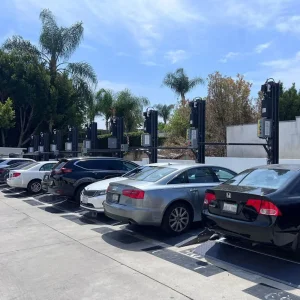
As global urban centers pivot toward electric mobility, the demand for charging infrastructure has reached an unprecedented scale. Historically, EV charging stations and mechanical parking stackers operated as separate utility items. Today, real estate constraints and spatial demands dictate that the two systems merge. Achieving this integration requires a thorough understanding of the physical dimensions of charging stations and their compliance with safety codes.
Under the CE Certification (Conformité Européenne) guidelines, parking lift structures and integrated charging terminals must undergo rigid electrical, mechanical, and thermal assessments. This whitepaper analyzes the physical dimensions, clearance margins, and supply chain strategies crucial to executing high-performance municipal, commercial, and residential projects.
A comprehensive overview of required spatial dimensions, platform clearances, and structural profiles for standard and integrated configurations.
Commercial wallbox chargers typically require a surface footprint of 450mm (h) x 300mm (w) x 180mm (d). Pedestal systems require at least 1500mm (h) x 350mm (w) x 250mm (d). Ensuring clean structural integration prevents spatial interference with surrounding structures.
To comply with CE safety protocols, a minimum lateral clearance of 250mm must be maintained between the charger outer housing and the vehicle mirror boundary. Furthermore, a minimum cable loop radius of 150mm is necessary to prevent structural shearing during operation.
High-voltage cables must run through structured, heavy-duty energy chains. Conduit dimensions require an inner diameter of 50mm to 80mm to accommodate insulated cables, maintaining isolated paths away from hydraulic valves.
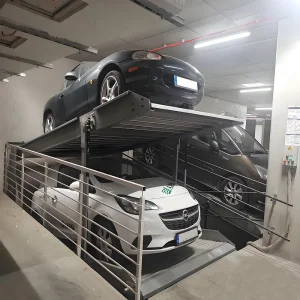
When implementing integrated charging features on products like the Double-Level 2 Post Car Parking Lift or the Triple-Level Car Parking Lift, the structural engineering team must calculate the dynamic weight load. Installing high-power cables adds mechanical resistance and dead weight, which must be offset by structural recalculations. Standard two-post lifts feature platform widths of 2100mm to 2200mm, but integrating AC charging connectors (Type 2 or CCS) often requires extending the platform width to 2300mm or 2400mm to allow operators safe passage while plugging in their vehicles.
Qingdao Cherish is an integrated industry and trade enterprise dedicated to the design, manufacture, and global supply of intelligent parking equipment and industrial processing solutions. With strong engineering capabilities, modern manufacturing resources, and extensive international project experience, we deliver reliable systems that support modern urban infrastructure and industrial development worldwide.
Founded by a team of experienced engineers and international business professionals, the company was established with a clear mission: to provide efficient, durable, and sustainable equipment solutions through continuous innovation, precision manufacturing, and customer-focused service. From initial concept design and technical planning to production, delivery, and after-sales support, we ensure consistent quality and dependable performance throughout every project lifecycle.
Today, our business operates through two specialized divisions to better serve diverse market needs and provide focused expertise across different industries.
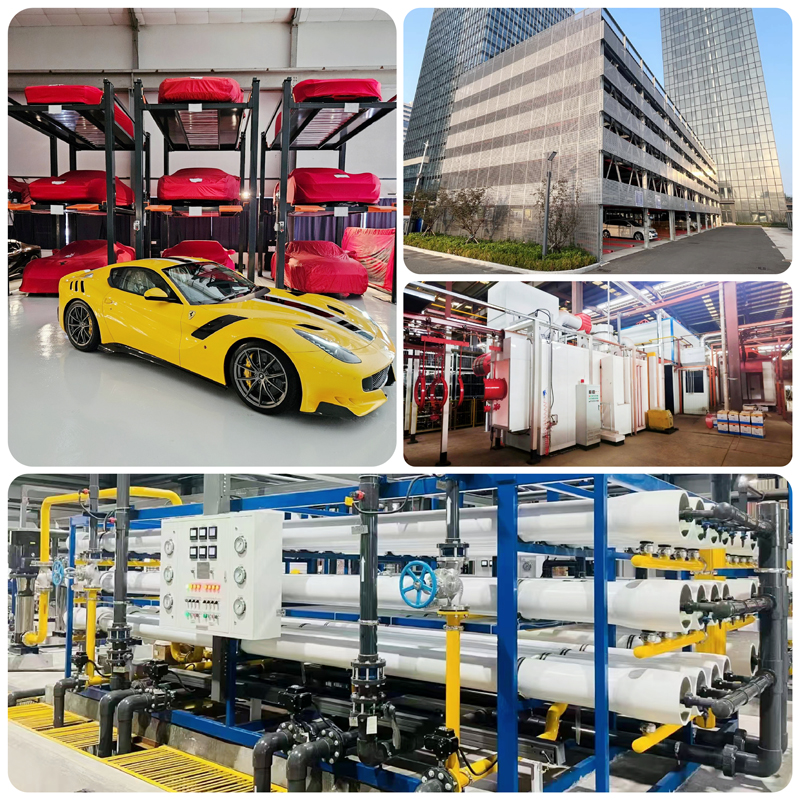
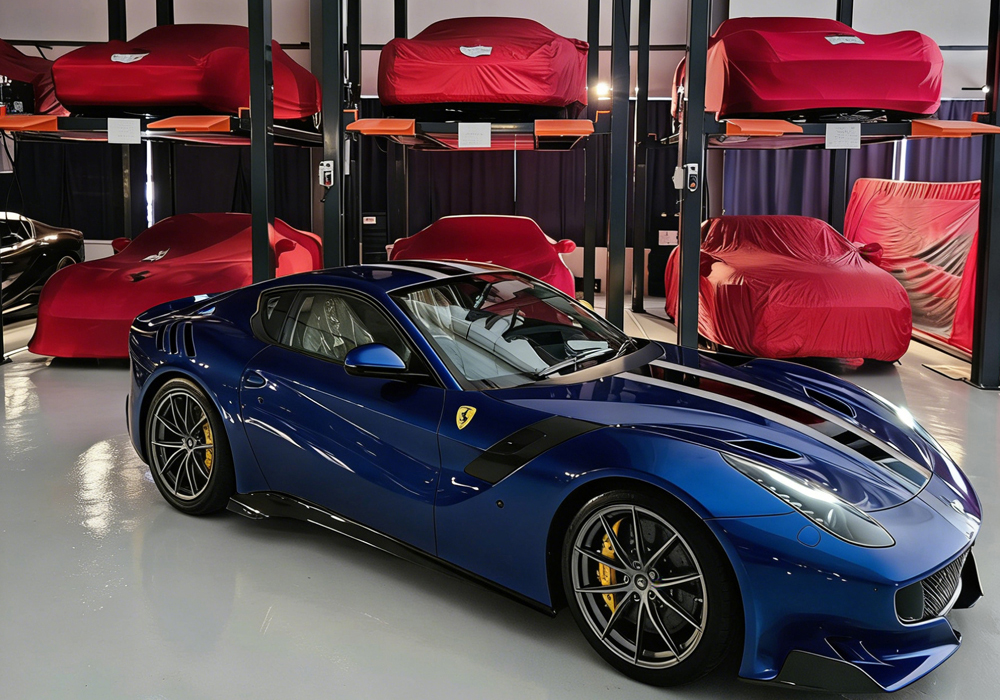
Our Parking Systems Division focuses on the development and production of car parking lifts, automated parking systems, car stackers, and customized parking solutions. Designed to maximize space utilization and operational efficiency, our systems are widely applied in residential buildings, commercial facilities, hospitals, and urban developments. Through continuous engineering innovation and strict quality control, we deliver safe, reliable, and space-saving parking solutions tailored to global project requirements.
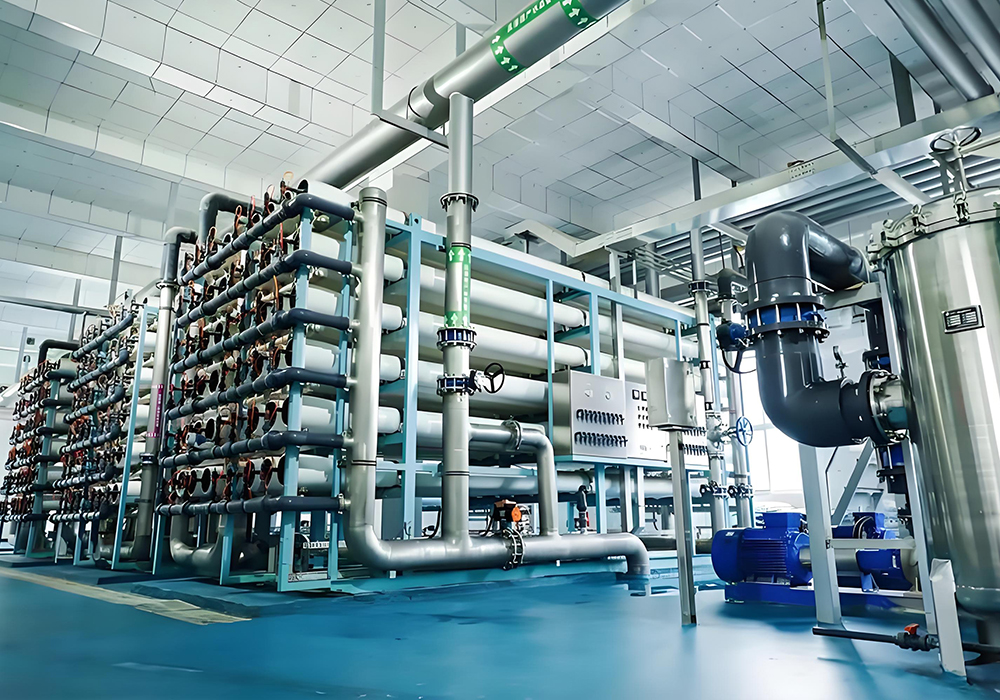
Our Industrial Equipment Division provides advanced powder coating lines and sewage treatment plant solutions for industrial applications. These systems are engineered to improve production efficiency, surface finishing quality, and environmental sustainability. By integrating automation technology with durable system design, we help clients optimize manufacturing processes while meeting modern environmental standards and regulatory requirements.
Different global markets require distinct design parameters for EV charging stations and mechanical lifts. Understanding these regional needs prevents integration failures and ensures compliance with local building codes.
In historical European locations, ceiling heights in underground garages often fall below 2.9 meters. Under these conditions, the Tilting Parking Lift is used to stack vehicles. To integrate EV charging here, systems use specialized side-angled outlets that run along the columns, keeping the charging infrastructure within the lift's spatial envelope.
North American installations must accommodate larger SUVs and light trucks, requiring heavy-duty structures like the 3000kg Quad-Level Four Post Car Parking Lift. High-voltage wiring must support both Level 2 (240V) and DC Fast Charging systems. This setup requires reinforced insulation and larger conduits to handle high current draw without overheating.
High-density cities in Asia rely on automated systems like the Multi-Level Automatic Puzzle Parking System. In these installations, automated shuttles route vehicles to specific bays. Intelligent power management systems distribute electricity dynamically, charging cars sequentially to prevent overloading the local grid.
CE marking is a legal requirement for importing mechanical lifts and electrical equipment into the European Economic Area (EEA). Integrated charging parking lifts must satisfy several critical directives:
To maintain reliable operations, our structures feature galvanized plating and outdoor-grade powder coating to prevent corrosion in coastal or damp underground environments.
Each structural component undergoes fatigue testing, finite element analysis (FEA), and high-load stress testing. All welds are verified by ultrasonic testing to ensure long-term structural reliability under heavy daily cycles.
Leveraging industrial clusters and modern manufacturing technology to deliver cost-effective and reliable parking infrastructure globally.
Our Qingdao manufacturing facility has direct access to high-grade structural steel from local mills. This keeps raw material costs stable and guarantees consistent mechanical strength across our product lines.
By using automated laser cutting machines and robotic welding systems, we manufacture high-capacity lifts like the Quad-Level Car Stacker with short lead times, keeping projects on schedule.
Located close to the Port of Qingdao, our facility benefits from reliable maritime logistics. This enables direct container loading and straightforward export routes to Europe, the Americas, and the Asia-Pacific region.
Anticipating market trends to design infrastructure ready for tomorrow's electric vehicle demands.
Developing structural layouts to support high-power liquid-cooled cables. This will allow heavy-duty commercial EVs to charge quickly while parked in automated stacks.
Integrating inductive charging pads directly into the lift platforms. This will eliminate the need for physical cables, reducing wear and tear while automating the charging process.
Equipping multi-car stackers with bidirectional power flows. This will allow parked vehicle fleets to feed power back into the local grid during peak demand hours.
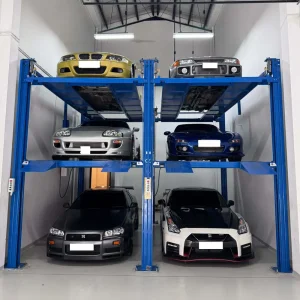
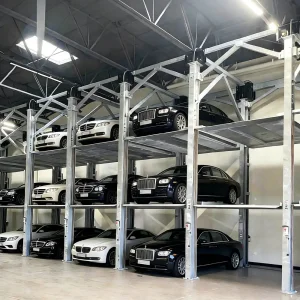
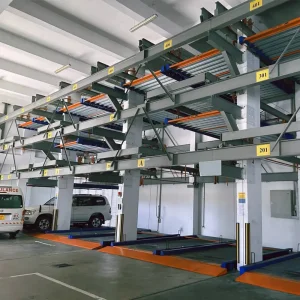
The Triple-Level Parking Lift is a game-changer for maximizing parking space. Designed to accommodate both sedans and SUVs, this lift offers a practical solution for those seeking efficient car storage. Whether you’re a homeowner looking to make the most of a limited garage or a business looking to optimize parking in a commercial setting, this lift makes parking and retrieval easy and convenient. With its durable construction and space-saving design, the Triple-Level Parking Lift is ideal for any environment where parking space is at a premium. Say goodbye to cramped spaces and hello to smart, effortless parking!
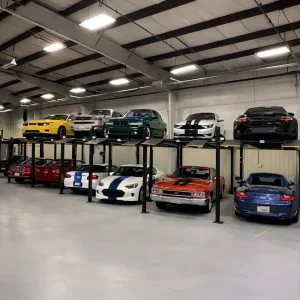
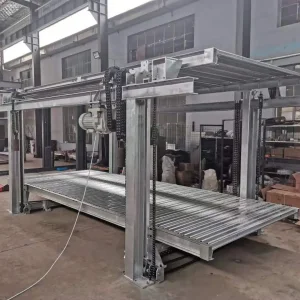
The Double-Level 2 Post Car Parking Lift offers different loading capacities of 2300kg or 2700kg, catering to your specific parking needs. With a maximum lifting height of 2100mm, it efficiently accommodates most vehicles while optimizing available space. The height of the columns may vary, so it’s important to consider the ceiling height, especially if you plan to install it indoors. This lift is ideal for both residential and commercial applications, providing a reliable solution for parking two vehicles in the same footprint. Make the most of your space without compromising on convenience or safety.
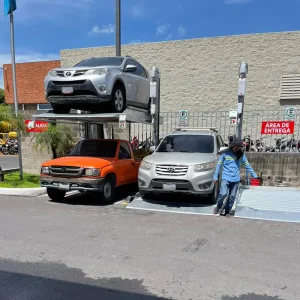
The Tilting Parking Lift is the perfect solution for spaces with low ceilings, such as basements. Its unique design allows the platform to tilt at an angle, optimizing parking in tight spaces. With an adjustable lifting height ranging from 1400mm to 1800mm, it offers flexibility to suit different vehicle sizes and parking requirements. With a maximum loading capacity of 2000kg, this lift ensures safe and efficient storage for your car. Ideal for both residential and commercial applications, the Tilting Parking Lift provides a space-saving, practical solution for parking in areas where conventional lifts may not fit.
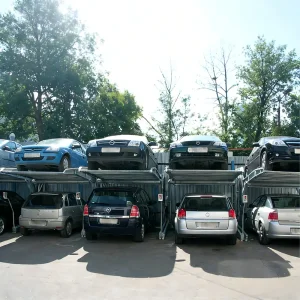
The Multi-Level 2-6 Levels Automatic Puzzle Parking System is a highly popular and cost-effective solution compared to other automatic parking systems. Designed for both indoor and outdoor use, this system maximizes parking space by stacking vehicles on multiple levels. It is fully customizable to fit your available land area, ensuring efficient use of space. The system can accommodate a wide range of vehicles, including sedans and SUVs, making it suitable for most cars. With its automated operation and space-saving design, the Multi-Level Puzzle Parking System offers a reliable and practical solution for both residential and commercial parking needs.
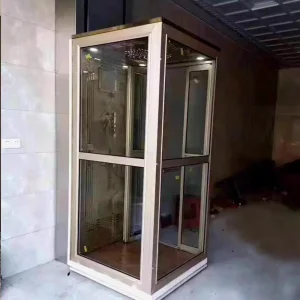
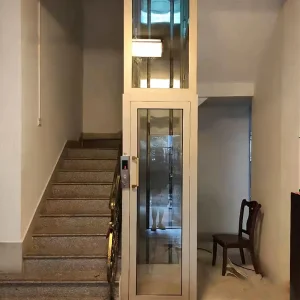
The Elevator with Double Rails for cars or cargo is a customizable solution designed to fit your available land space. It can be used both as a freight elevator and a car elevator, offering flexibility for various applications. One of its key features is that it doesn't require a pit, making it easier to install in locations like workshops or car showrooms. With its sturdy construction and efficient operation, this elevator is perfect for transporting vehicles or heavy cargo between different levels. It’s an ideal solution for businesses that require reliable and safe vertical transportation.
The Quad-Level Car Stacker, a 4-post parking lift, is designed to store up to 4 cars vertically, offering a highly efficient space-saving solution. With the same structure, it can also be configured as a 3-level system, providing flexibility based on your needs. This mechanical parking lift is built for durability, capable of handling both sedans and SUVs. It can be installed indoors or outdoors, making it ideal for residential or commercial spaces where maximizing parking capacity is essential. Strong and reliable, the Quad-Level Car Stacker is perfect for efficient and safe vehicle storage, optimizing your available space.
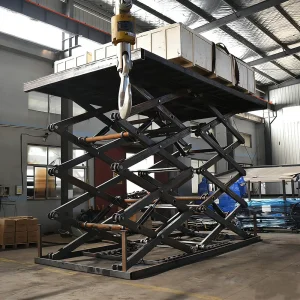
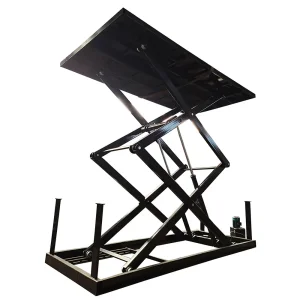
The Underground Scissor Lift with double decks is a customized solution designed to fit your specific pit size. This innovative lift allows cars to be hidden underground, providing a sleek and space-saving solution, especially suited for villa yards. Popular in Australia, this lift maximizes parking space while keeping your vehicles discreetly stored. Its design can be tailored to your preferences, allowing for customization in terms of decoration and functionality. With its smooth operation and efficient use of space, the Underground Scissor Lift offers both practicality and aesthetic appeal, making it ideal for luxury homes or modern properties.
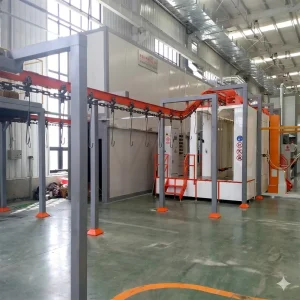
Powder coating lines represent one of the most advanced coating technologies in the world today. Their primary advantage lies in emitting little to no volatile organic compounds (VOCs). Compared to traditional liquid coatings, powder coatings can form more uniform and thicker layers without issues like dripping or sagging. Additionally, over spray from powder coatings can be efficiently recycled, achieving nearly 100% material utilization and significantly reducing waste. Powder coating lines generate less hazardous waste and have lower capital investment and operational costs compared to traditional liquid coating lines. Powder-coated surfaces exhibit superior consistency in appearance between horizontal and vertical surfaces, and they can easily achieve a variety of special effects that are difficult to replicate with other coating processes.
With the acceleration of urbanization and the rapid development of industrialization, sewage or waste water treatment plants have become critical components of environmental protection efforts. We are committed to providing efficient and reliable diversified solutions, including industrial wastewater and domestic sewage recycling, water reuse, and zero-discharge treatment systems; full membrane and reverse osmosis desalination systems; as well as pre-treatment filtration equipment for seawater desalination, pure water, and ultra-pure water. Through innovative technologies, we aim to support sustainable water resource management and contribute to global environmental protection.
Detailed answers to common questions regarding CE certification, dimensions, installation, and integration.
Integrating a charger onto a lift platform requires calculating both horizontal and vertical clearances. To keep the plug safe, maintain at least 250mm of lateral space between the charger unit and the vehicle body. You also need to configure the cable management system with a minimum bending radius of 150mm to prevent the power lines from pinching when the lift moves.
Integrated systems must comply with both the Machinery Directive 2006/42/EC for mechanical safety and the Low Voltage Directive 2014/35/EU for the electrical charging components. They must also pass electromagnetic compatibility tests to ensure high-voltage charging currents do not interfere with the lift's control systems.
Yes, but this requires specialized configurations. Since tilting lifts park vehicles at an angle, the charger connector should be positioned on the side rather than the rear. Cable management tracks must also be flexible enough to handle the tilting motion without putting tension on the connection.
Electric vehicles are typically heavier than internal combustion vehicles due to their battery packs. Lifts must be reinforced with thicker steel plates, larger hydraulic cylinders, and updated safety locks to handle capacities of 2700kg to 3000kg safely.
Smart systems use dynamic load management. The control software coordinates power distribution, prioritizing vehicles that need quick charging and rotating power across bays to prevent overloading the facility's electrical grid.
Explore our range of systems designed for international logistics, residential developments, and industrial coating lines.
 Cherish