Explore our certified automotive parking structures and industrial lifts engineered for maximum longevity and safety.
An in-depth analysis of vehicle structural loading, telescopic arm dynamics, and localization compliance requirements.
When operating a 2-post car lift, the determination of lifting points is not merely a matter of convenience—it is a critical mechanical calculation of gravitational balance and structural load distribution. Standard two-post lifts position approximately 50% to 60% of the total vehicle weight on the front swing arms and the remaining weight on the rear swing arms. Improper alignment of the vehicle's center of gravity relative to the columns can result in column deflection, slide block binding, or catastrophic tipping.
For modern unibody passenger vehicles, lifting points are carefully specified by original equipment manufacturers (OEMs) along the reinforced pinch welds of the rocker panels. Conversely, body-on-frame light trucks require frame-contact lifting points directly beneath the main chassis rails. Safely supporting these vehicles requires specialized swing arm configurations (symmetric vs. asymmetric) and heavy-duty telescoping arm designs.
Asymmetric arm configurations allow the vehicle to be positioned further rearward, placing the center of gravity directly inline with the columns. This enables vehicle doors to open wider for easier cabin access.
Utilizing high-durometer polyurethane pad inserts prevents metal-on-metal sliding and eliminates pinch-weld paint damage, avoiding corrosion on customers' vehicles.
Our 2-post lift models integrate automatic arm restraint lock systems. These engage when the carriage rises, locking the swing arms in position to prevent shifting.
Located in Qingdao, the hub of Chinese heavy engineering and global logistics, Qingdao Cherish integrates vertical supply chain sourcing with ISO 9001-certified manufacturing. By direct-sourcing high-grade structural Q355B steel and implementing robotic welding systems, we ensure structural steel columns maintain vertical alignment without deformation under heavy loads.
Our localized supply chain partners enable us to manufacture precision tolerance arm pins, internal slide blocks, and hydraulic cylinders in-house. This degree of control minimizes component wear and ensures that replacement parts are readily available for rapid dispatch globally. This infrastructure supports both the Parking Systems Division and our industrial fabrication processes.
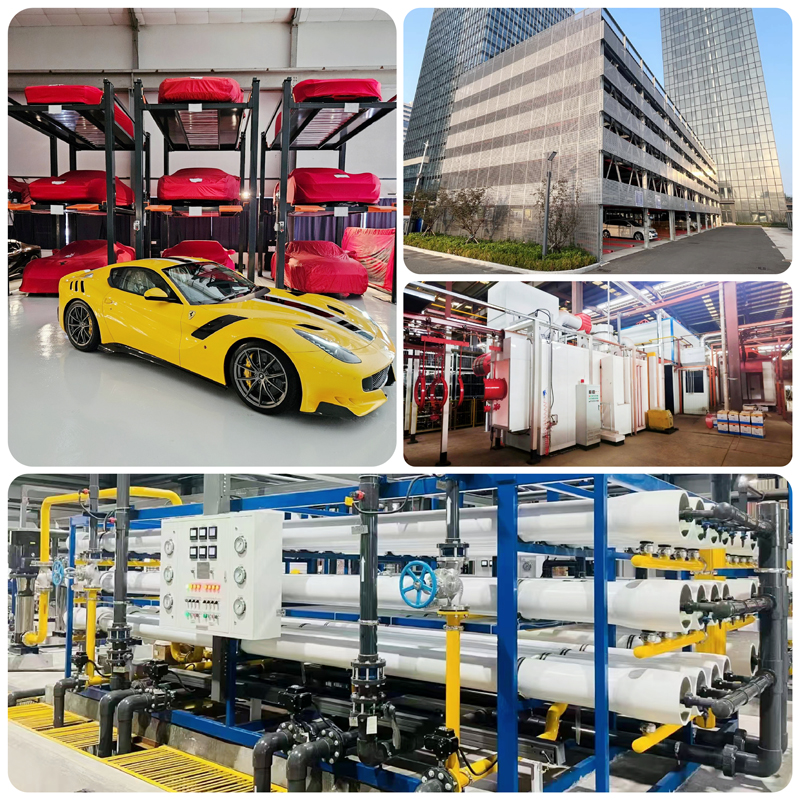
Qingdao Cherish is an integrated industry and trade enterprise dedicated to the design, manufacture, and global supply of intelligent parking equipment and industrial processing solutions.
Our Parking Systems Division focuses on the development and production of car parking lifts, automated parking systems, car stackers, and customized parking solutions. Designed to maximize space utilization and operational efficiency, our systems are widely applied in residential buildings, commercial facilities, hospitals, and urban developments. Through continuous engineering innovation and strict quality control, we deliver safe, reliable, and space-saving parking solutions tailored to global project requirements.
Our Industrial Equipment Division provides advanced powder coating lines and sewage treatment plant solutions for industrial applications. These systems are engineered to improve production efficiency, surface finishing quality, and environmental sustainability. By integrating automation technology with durable system design, we help clients optimize manufacturing processes while meeting modern environmental standards and regulatory requirements.
Guided by our core values — quality, innovation, reliability, and long-term partnership — Qingdao Cherish has steadily expanded its presence across international markets. We are committed to delivering cost-effective solutions, professional technical support, and long-term value to partners worldwide. Looking ahead, we aim to become a trusted global provider of intelligent parking and industrial engineering solutions, contributing to smarter cities and more sustainable industries.
How global regulations and new vehicular architecture shape modern vehicle lift design.
The global shift toward electric vehicles has introduced new challenges for 2-post car lift lifting points. Unlike traditional internal combustion engine (ICE) vehicles that offer flexible frame points, EVs utilize a skateboard design where the battery pack covers the underbody from axle to axle. The lifting points are located along the perimeter of the frame rail, with minimal clearance between the lifting pad and the battery pack cover.
Lifting an EV incorrectly can damage the battery shell, potentially causing thermal runaway. Qingdao Cherish is developing low-profile swing arms and wider pad adapters to ensure that technicians can reach designated lifting points without contacting the battery pack housing.
Ensuring compliance with localized safety standards is essential for industrial equipment installations. Our global setups adhere to: ANSI/ALI ALCTV in North America, and the European standard EN 1493. We provide local inspection support, overload test certification, and bilingual structural manuals to help facilities meet safety regulations and pass site audits.
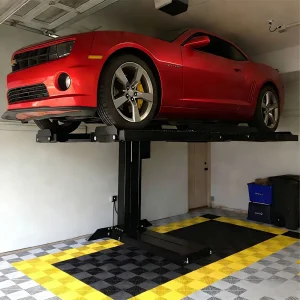
Low-clearance structures require specialized tilting lifts or low-profile single-post models. The adjustable lifting height limits range from 1400mm to 1800mm, optimizing safety within standard residential ceiling limits.
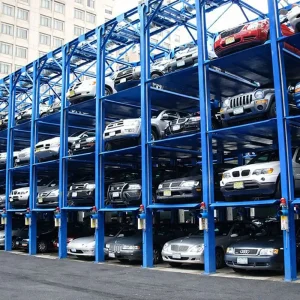
For high-capacity service fleets, we supply multi-level four-post lifts and double-deck stackers that are engineered for high-duty cycles, automated lockouts, and continuous operations.
Our research includes introducing automatic position-sensing systems using LiDAR and vision algorithms. These systems help identify OEM lifting points to prevent human error during alignment.
Technical profiles of our key lift configurations designed for diverse commercial and residential applications.
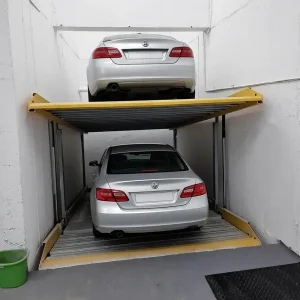
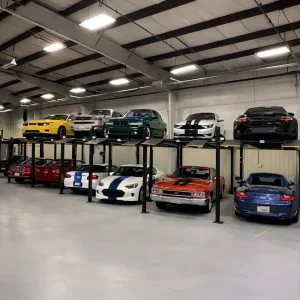
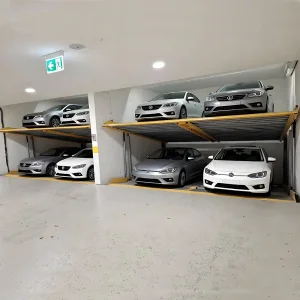
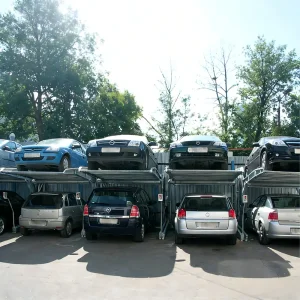
Designed for SUVs and sedans, this lift is designed to maximize vertical space. It serves as an efficient car storage solution for space-constrained residential garages and commercial facilities. Solid engineering ensures safety across all levels, keeping vehicles secure and easy to access.
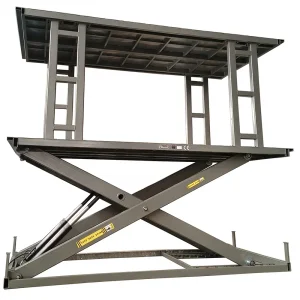
Offering load capacities of 2300kg or 2700kg, this lift matches diverse parking requirements. With a max lifting height of 2100mm, it fits most standard vehicles. Column heights can be configured to suit available ceiling heights, making it suitable for both home garages and commercial applications.
The perfect solution for low-clearance spaces, such as residential basements. Its tilting platform design allows vehicles to be parked at an angle. The lift features an adjustable height range from 1400mm to 1800mm with a loading capacity of 2000kg.
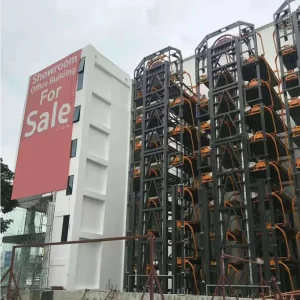
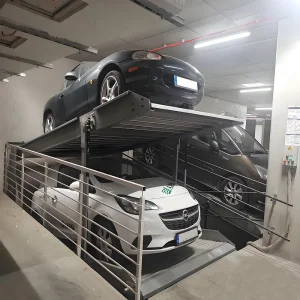
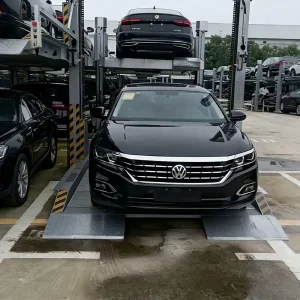
An automated parking solution configured across 2 to 6 levels. This system moves platforms laterally and vertically to store and retrieve vehicles. It is customizable to fit your available land footprint and can accommodate both sedans and SUVs.
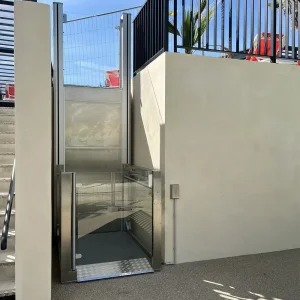
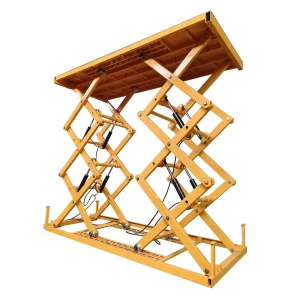
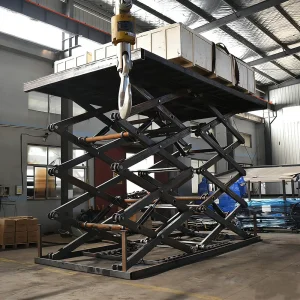
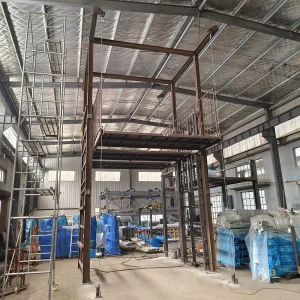
Designed for vertical transportation between levels without the need for a pit. This makes installation straightforward in showrooms, warehouses, and factories. It functions as both a heavy cargo elevator and a vehicle lift.
Designed for high material utilization and minimal waste. These automated lines produce a uniform protective finish on steel parts. By recycling overspray, they offer low operational costs and help meet modern environmental standards.
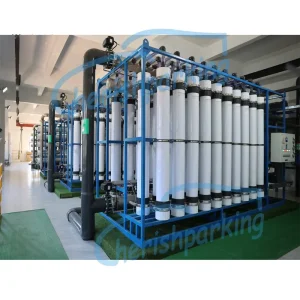
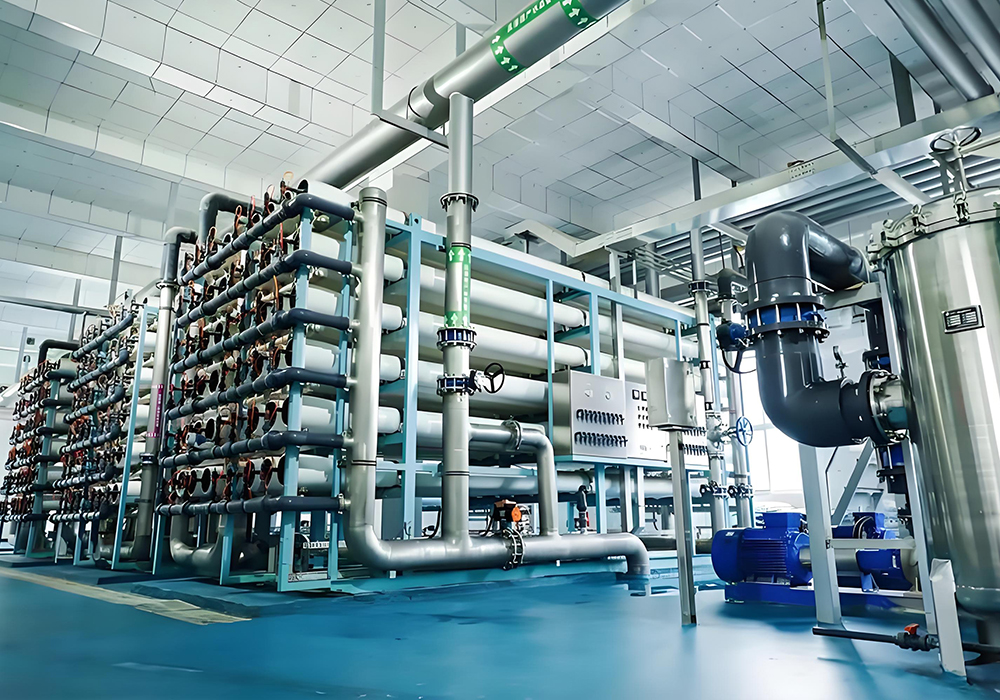
Designed to support sustainable industrial water management. We provide industrial wastewater recycling, reverse osmosis desalination, and membrane filtration systems that meet strict environmental regulations.
Clear, direct answers to common questions regarding vehicle positioning, safety checks, and lift operation.
Engineered to maximize layout efficiency, satisfy structural certifications, and deliver long-term reliability.
 Cherish