Our industrial systems deliver uniform electrostatic coverage and energy-efficient curing processes for heavy duty manufacturing applications.
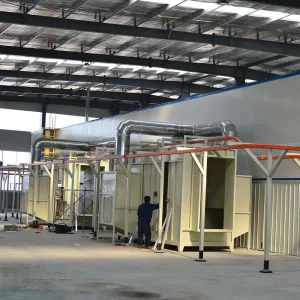
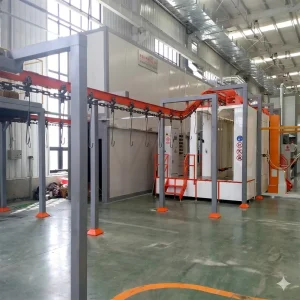
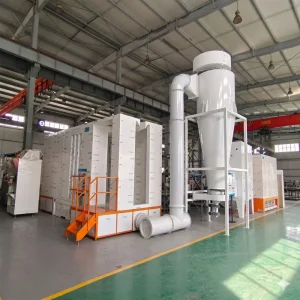
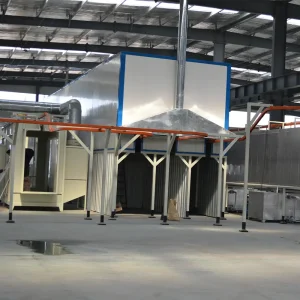
In modern manufacturing ecosystems, the durability, protection, and cosmetic appeal of surface finishes are non-negotiable prerequisites. For the industrial sectors operating in and around Chicago, Illinois—ranging from heavy machinery fabrication, structural steel construction, automotive components, to architectural aluminum profiles—selecting the correct coating process is central to commercial success. Industrial powder coating lines represent the apex of this technology, providing an environmentally compliant, highly durable, and cost-effective alternative to traditional wet-solvent paint systems.
Qingdao Cherish, operating as a seasoned industry manufacturer, delivers turn-key engineering solutions designed to meet the rigorous operational requirements of American and global markets. This paper provides a deep analysis of modern powder coating architectures, environmental compliance standards (specifically focusing on EPA Title V and Illinois EPA rules), system component engineering, and global logistics integration.
Chicago remains a critical hub in the US industrial heartland. Serving key areas such as Elk Grove Village, Elgin, Joliet, Aurora, and Gary, the local metalworking industry requires finishing options that resist the severe seasonal changes and high-salinity road environments of the Midwestern United States. Powder coating has emerged as the preferred methodology due to its superior resistance to mechanical chipping, UV degradation, thermal shock, and chemical exposure.
Furthermore, environmental compliance within the Chicago metropolitan area is governed strictly by the Illinois Environmental Protection Agency (IEPA). Traditional liquid paint systems emit massive quantities of Volatile Organic Compounds (VOCs) and Hazardous Air Pollutants (HAPs). Switching to an automated, closed-loop electrostatic powder coating system removes VOC emissions from the finishing equation, allowing facilities to maintain compliance, avoid costly air permit fines, and align with environmental, social, and corporate governance (ESG) targets.
Qingdao Cherish is an integrated industry and trade enterprise dedicated to the design, manufacture, and global supply of intelligent parking equipment and industrial processing solutions. With strong engineering capabilities, modern manufacturing resources, and extensive international project experience, we deliver reliable systems that support modern urban infrastructure and industrial development worldwide.
Founded by a team of experienced engineers and international business professionals, the company was established with a clear mission: to provide efficient, durable, and sustainable equipment solutions through continuous innovation, precision manufacturing, and customer-focused service. From initial concept design and technical planning to production, delivery, and after-sales support, we ensure consistent quality and dependable performance throughout every project lifecycle.
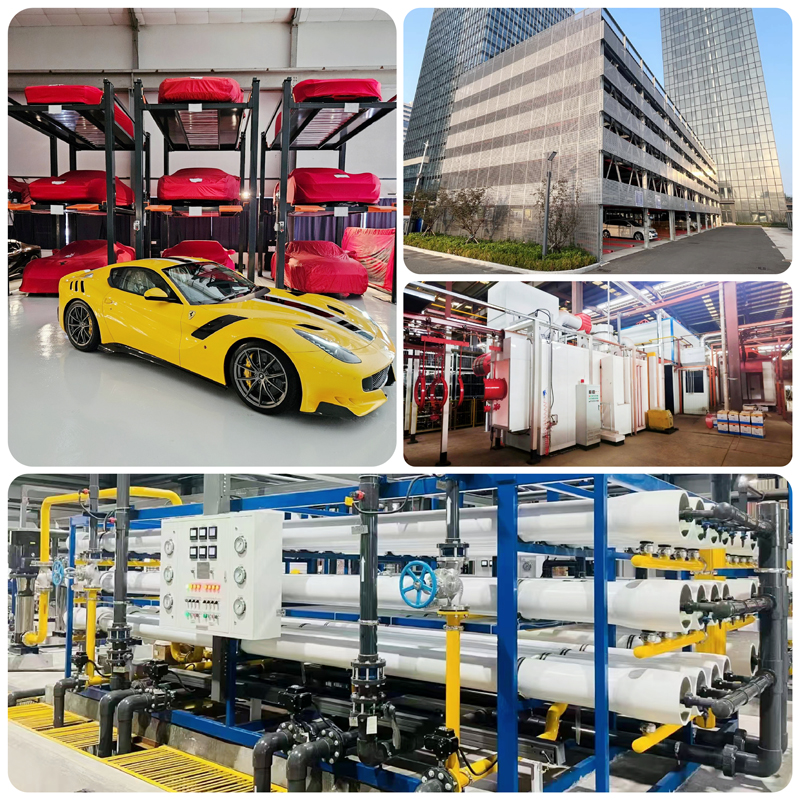
Our operations are divided into two highly specialized divisions designed to offer targeted industry solutions:
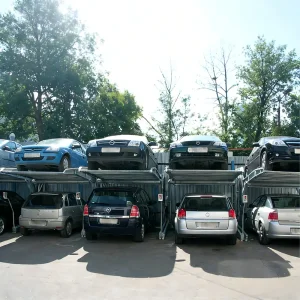
Focuses on the development and production of car parking lifts, automated parking systems, car stackers, and customized parking solutions designed to optimize space in commercial, residential, and industrial environments worldwide.
Provides advanced powder coating lines, electrostatic application machinery, conveyorized systems, and environmental treatment solutions. This division helps industrial firms scale production efficiency while meeting global regulatory standards.
Integrates eco-friendly engineering, wastewater treatment systems, and automated material handling technologies to minimize resource footprint, recycling up to 98% of powder overspray and optimizing fuel consumption.
Achieving a high-performance finish relies on a multi-stage process that must be carefully engineered for thermal efficiency, mechanical reliability, and consistent electrostatic behavior.
Adhesion is only as good as the cleanliness of the substrate. For Chicago-area fabricators processing hot-rolled steel, cold-rolled steel, or aluminum, our multi-stage washing systems offer optimal preparation. Our lines incorporate:
The core of the coating application relies on electrostatic principles. The powder is fluidized and pushed through corona charging guns, giving the particles a negative electrical charge. The metal part is grounded, creating an electrostatic field that pulls the powder uniformly to the part's surface.
Our powder recovery booths feature high-efficiency cyclone separators and cartridge filters. This setup enables recovery rates up to 98% for oversprayed powder, which is automatically sieved and mixed back with virgin powder for reuse.
Once coated, the dry powder layer must be cured to cross-link the polymers into a durable finish. Our curing ovens are engineered with high-density mineral wool insulation, energy-efficient gas burners, and forced air circulation. This ensures a uniform temperature distribution inside the curing chamber (with variances under ±5°C), avoiding uncured sections or brittle over-curing.
Operating in the United States and North American markets requires compliance with demanding industrial standards. Our powder coating equipment lines are designed, fabricated, and certified to meet the following frameworks:
The next generation of industrial processing relies on digital integration. Our development roadmap incorporates three core trends:
1. Artificial Intelligence and Optical Scanning: Integrating inline 3D cameras and optical sensors allows the system to recognize the dimensions of incoming parts in real-time. The PLC controller automatically adjusts the travel path, spray angle, and charging voltage of the reciprocator-mounted guns, maximizing throughput and reducing powder waste.
2. Industrial IoT and Predictive Maintenance: Smart sensors monitor the thermal profile of curing ovens, the pressure drops across cartridge filters, and conveyor line speed. This data is fed to a centralized panel, alerting operators before components fail to minimize unscheduled downtime.
3. Hybrid Curing Technologies: Combining gas convection with gas-catalytic infrared (IR) preheating zones allows the coating to gel quickly before entering the convection oven. This setup reduces the footprint of the oven and cuts gas consumption by up to 25%.
Powder coating is environmentally superior because it releases virtually zero Volatile Organic Compounds (VOCs). Technically, it allows for a thicker, more uniform finish in a single pass without run-offs or sags. Physically, it is much more resistant to mechanical damage, impacts, and corrosion, and the overspray can be recycled, yielding up to 98% material utilization.
The critical factor is the chemical pretreatment stage. Steel usually requires an alkaline wash and acid pickling or iron phosphating to build corrosion protection. Aluminum requires a non-chromate conversion coating or zirconium treatment to maximize adhesion without damaging the substrate. We design multi-stage spray tunnels that allow operators to switch parameters depending on the component type.
Our systems align with global safety standards, including NFPA 33. We incorporate spark-free ventilation fan blades, explosion relief panels in the booths, automatic safety interlocks that cut off electrostatic power if the exhaust airflow drops, and integrated fire detection systems.
For custom industrial lines, engineering design and fabrication typically require 45 to 60 days. Shipping from our facilities to Chicago takes approximately 30 to 45 days. We provide complete layout diagrams, wiring schematics, remote supervision, and on-site engineering dispatch options to support installation, commissioning, and staff training.
Yes, our overhead conveyor options (including power-and-free, monorail, and cardan chains) are highly modular. We customize our drive units, load limits, and speed controls to match your existing production workflow.
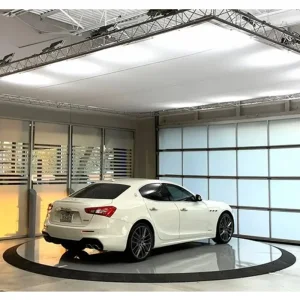
Heavy-duty hydraulic car storage systems and industrial turntables engineered for manufacturing yards, commercial developments, and warehousing facilities.


 Cherish