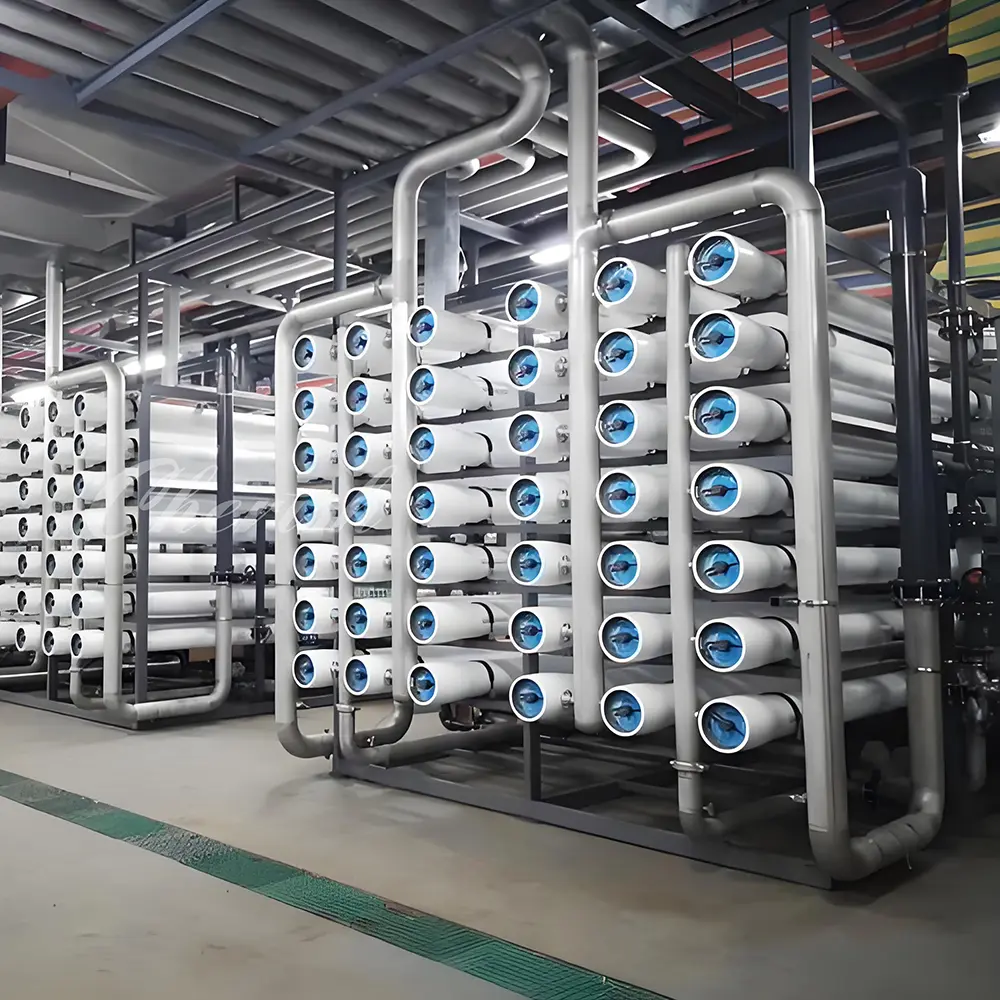
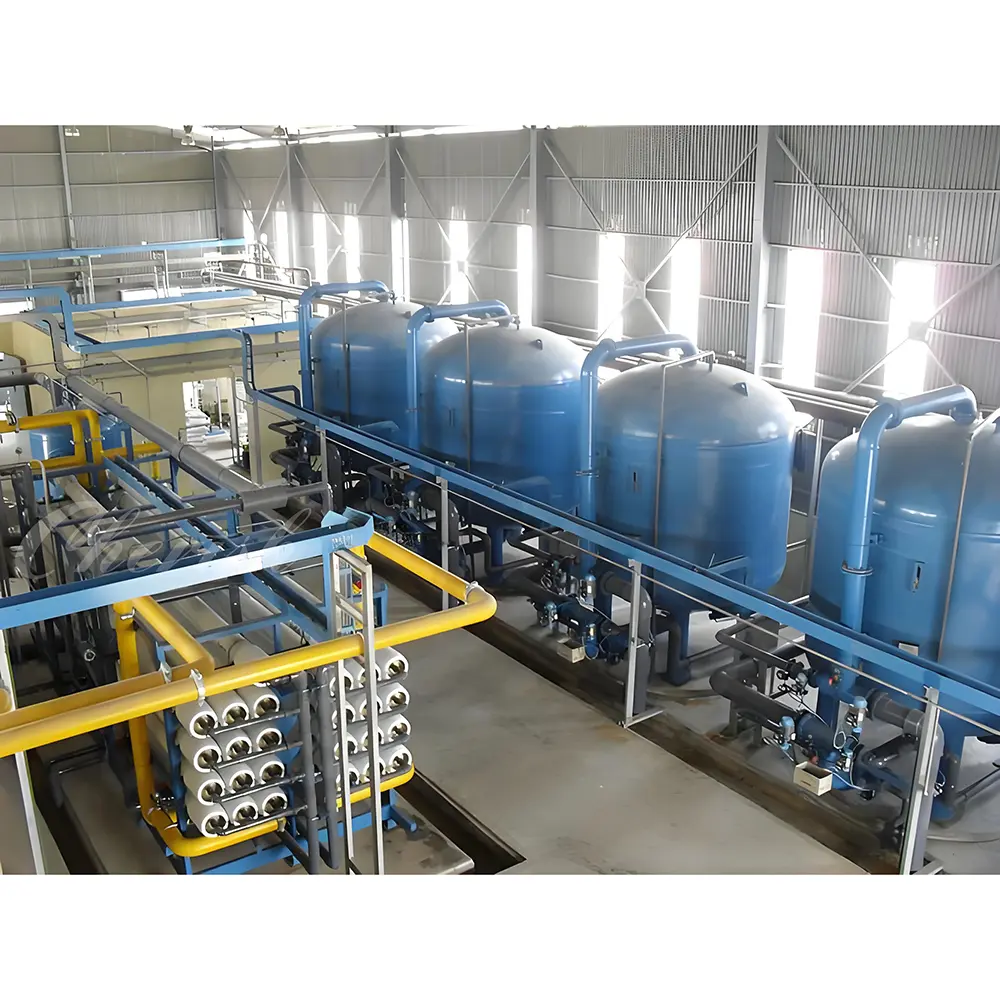
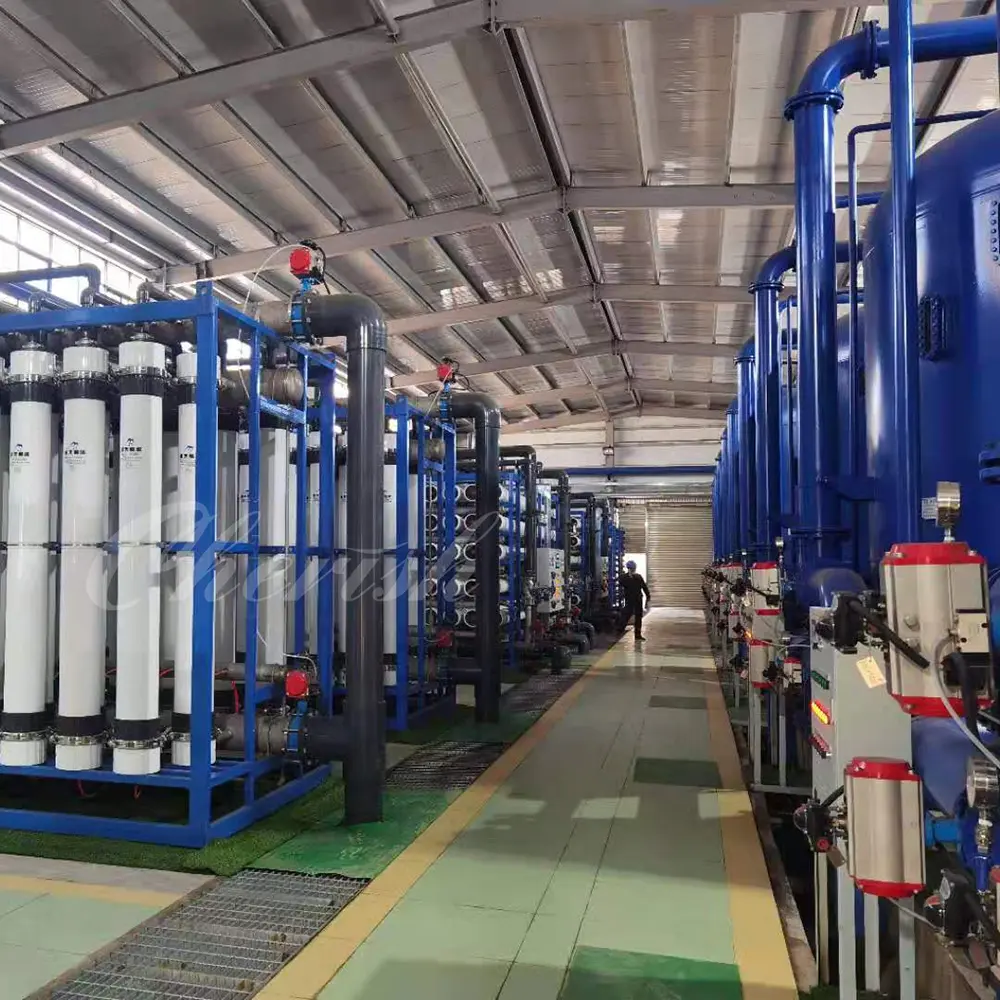
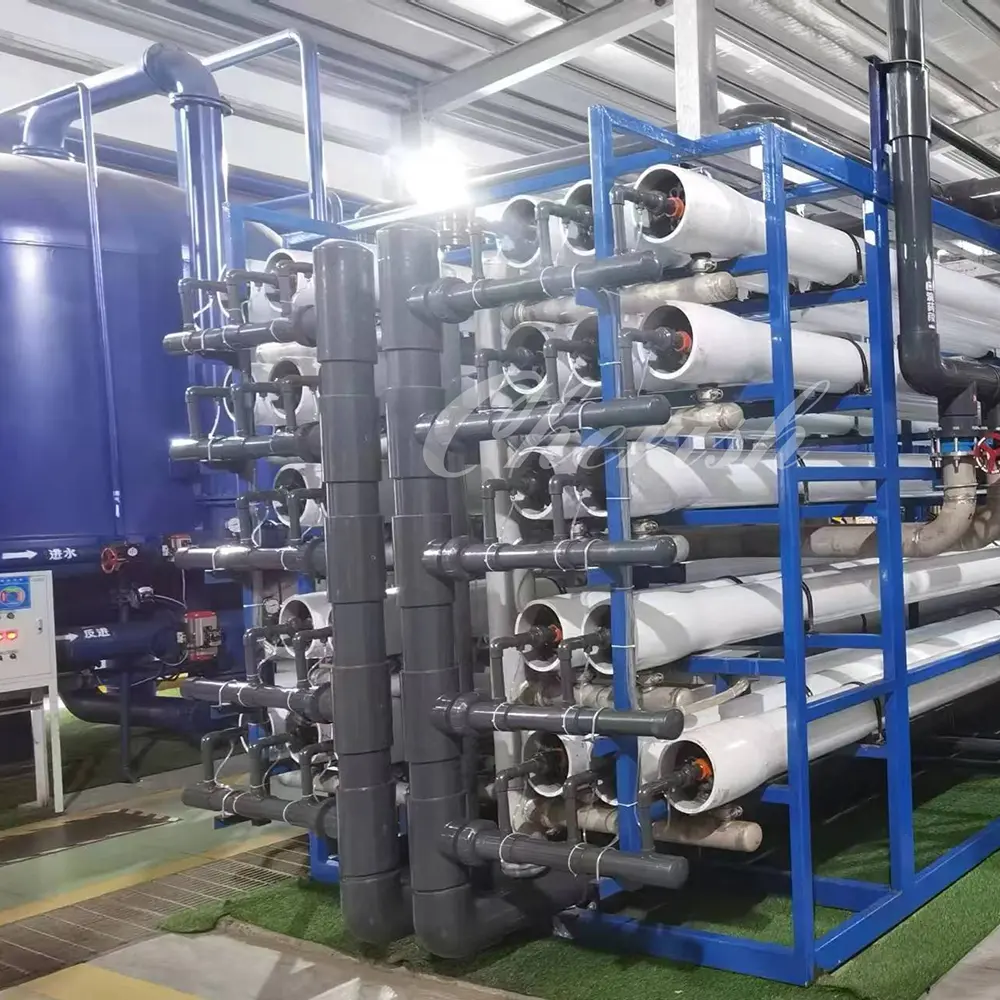
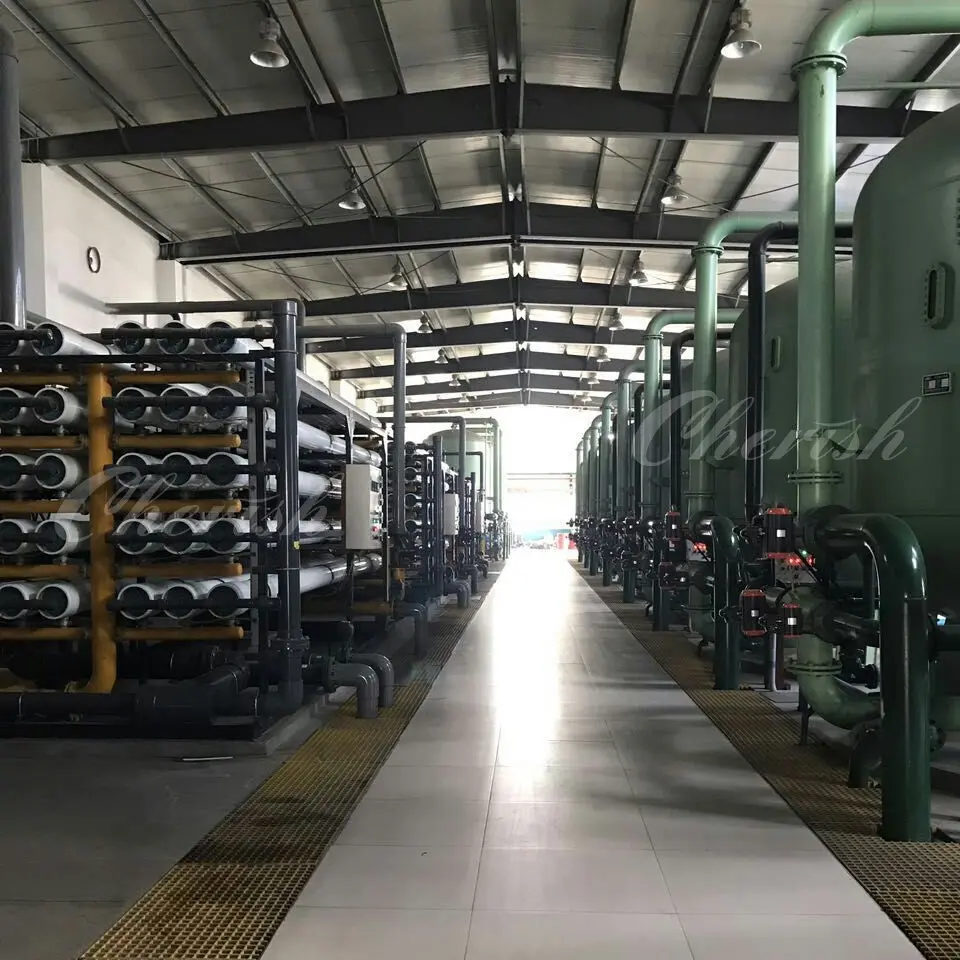
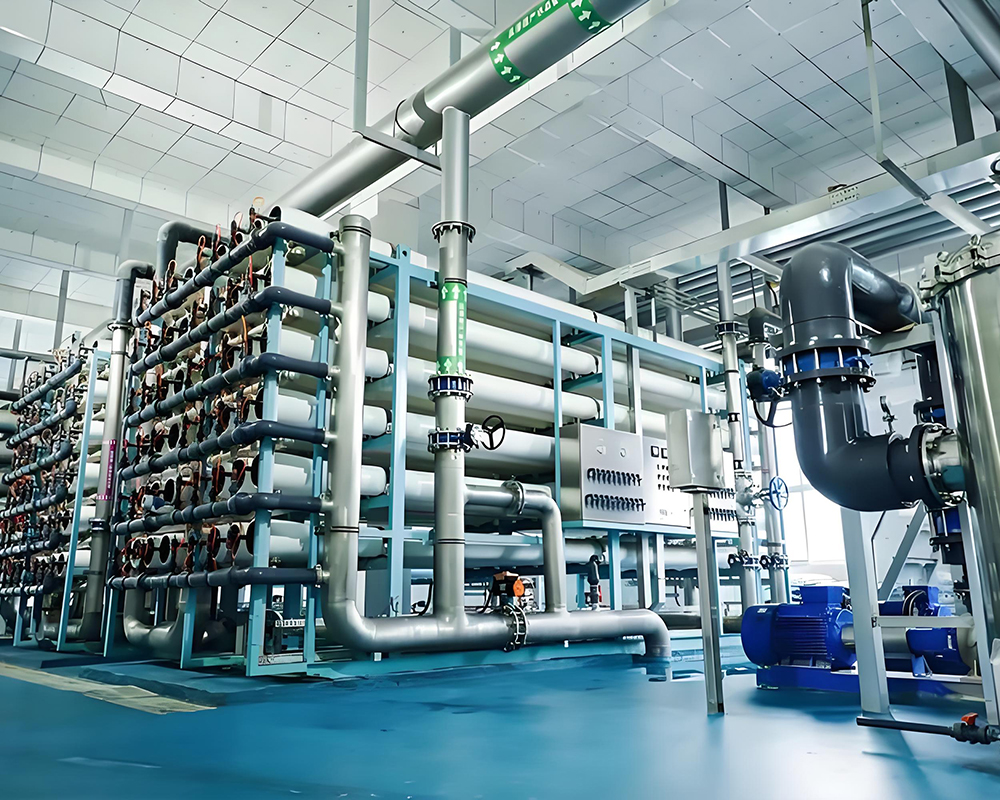
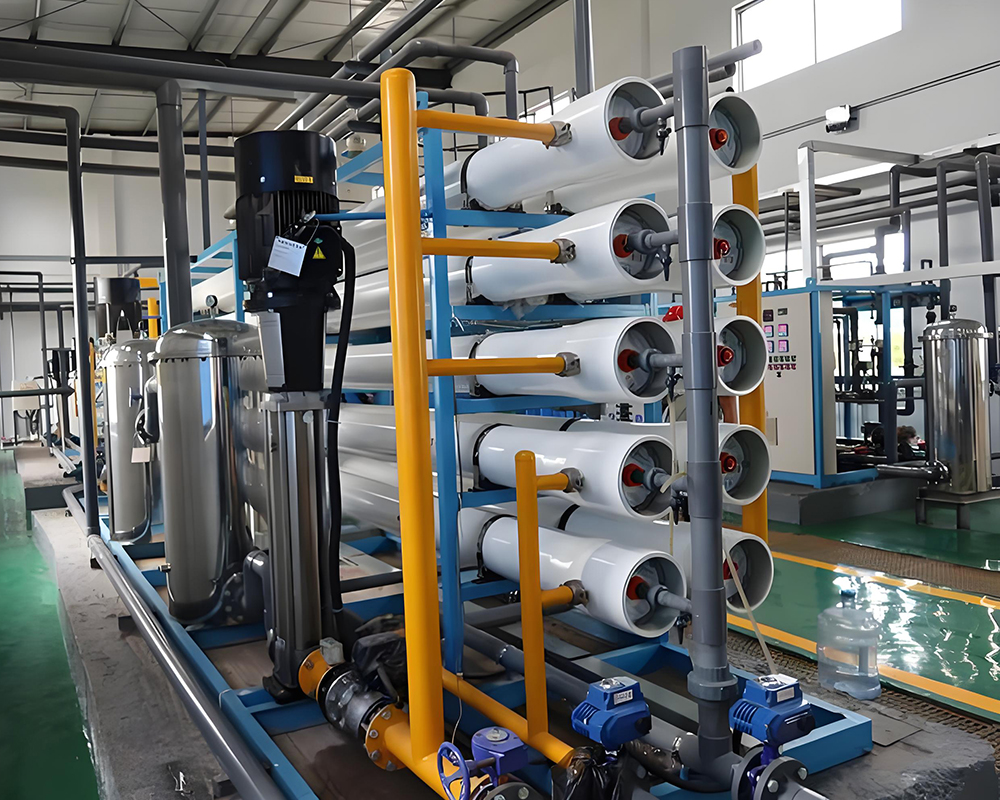
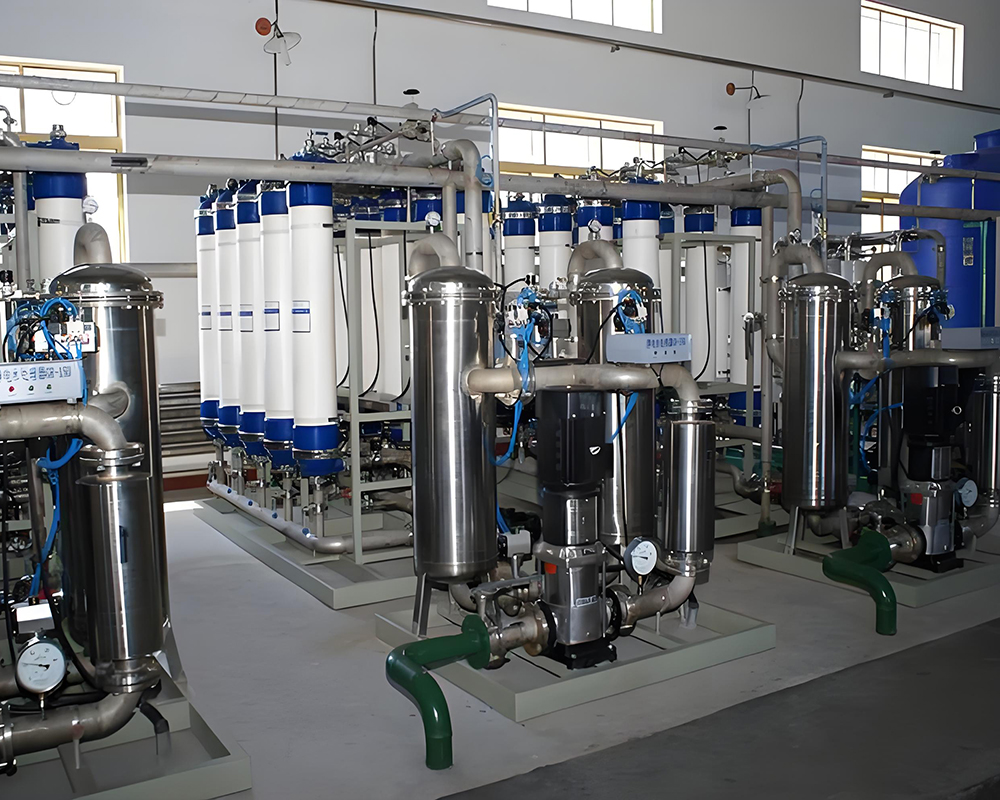
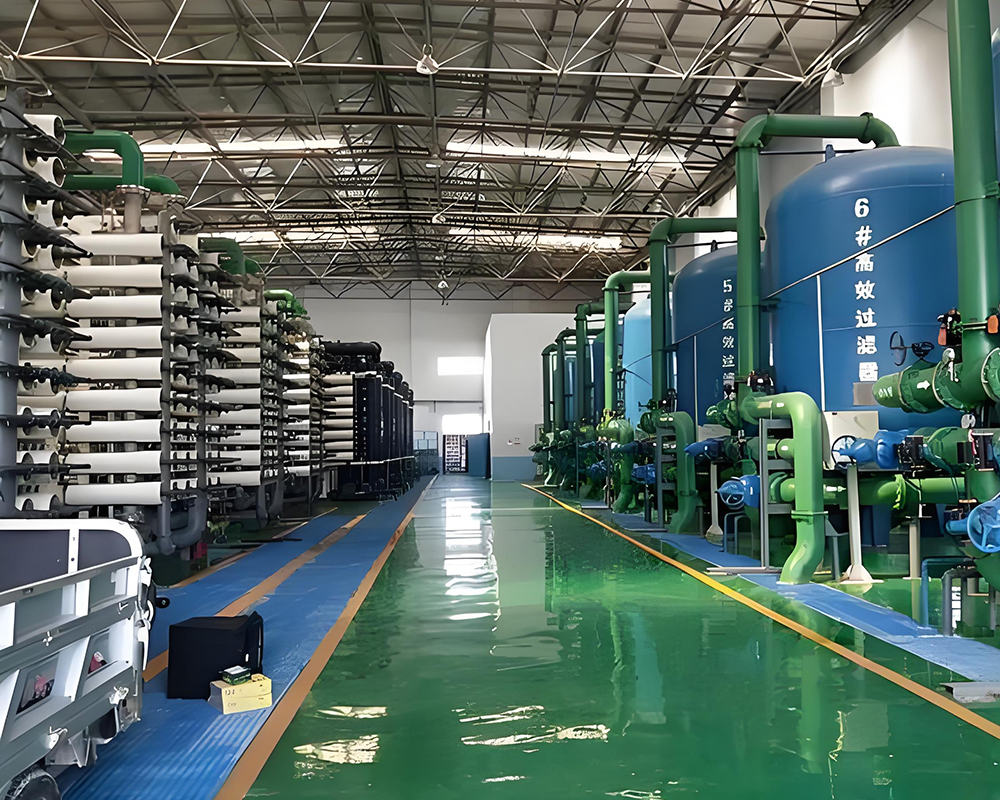
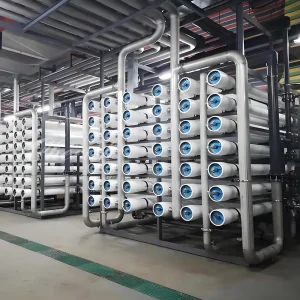
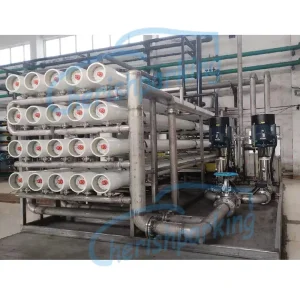
Reverse Osmosis (RO) is a filtration process that utilizes semi-permeable spiral-wound membranes to remove dissolved solids, organic matter, pyrogens, submicron colloidal particles, color, nitrates, and bacteria from water. Under pressure, feed water passes through the membrane, allowing purified water, known as permeate water, to pass through its microscopic pores. Meanwhile, the concentrated impurities are separated and discharged as reject water, also called concentrate water.
RO membranes are widely used in various small-scale systems, including household water purification, hospital and laboratory cleaning, and other specialized water treatment applications. They provide high flux performance comparable to conventional low-pass filtration while effectively removing salts and contaminants.
Green irrigation, road cleaning, equipment washing, landscape water, toilet flushing
System Features
Integrated design, small footprint, stable operation, easy maintenance
Effluent Quality
Meets national reclaimed water reuse standards
Operation Mode
Automatic control, low energy consumption, low operation cost
Application Scope
Residential quarters, factories, hospitals, schools, public buildings
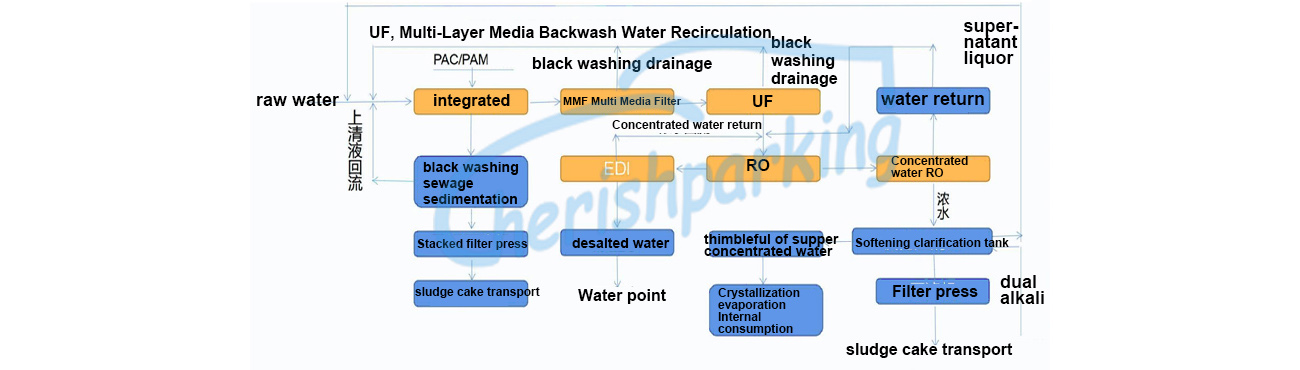
Working process
Product Features
We offer design service according to your water analysis, can provide equipment according to your requirements.
The system uses a physical method without phase change to desalinate and purify root-containing water under greenhouse conditions. The desalination rate can reach more than 99.9%, and colloids, organic matter, bacteria, viruses, etc. in the water can be removed at the same time;
Water purification relies only on water pressure as the driving force, and its energy consumption is the lowest among many water treatment methods;
The system can operate continuously to produce water, the system is simple, easy to operate, and the product water quality is stable;
There is no discharge of chemical waste liquid, no neutralization treatment process of waste acid and alkali, and no environmental pollution;
The system device is highly automated, and the operation and equipment maintenance workload is very small;
The equipment occupies a small area and requires less space;
The removal rate of colloids such as silica and organic matter in water can reach 99.5%;
The system equipment can operate continuously to produce water without stopping regeneration and other operations.
Product Water Specifications
At the lowest incoming water temperature, the worst water quality, and the maximum flow rate, the system's treated water quality and normal output must meet user requirements.
Pre-Treatment
(Integrated Water Purifier, Multi-Media Filter, Ultrafiltration)
• Net Water Production: Designed according to customer requirements
• SDI of Treated Water: ≤3
First-Stage RO System
• Water Production: Designed according to customer requirements
• Salt Rejection Rate:
≥98% within one year
≥96% within three years
≥95% within five years
• Recovery Rate: ≥75%
Second-Stage RO System
• Water Production: Designed according to customer requirements
• Salt Rejection Rate: ≥95% within five years
• Recovery Rate: ≥85%
EDI System
• Water Production: Designed according to customer requirements
• Product Water Quality:
Resistivity: ≥15 MΩ·cm (at 25℃)
Silica (SiO₂): ≤20 μg/L
Hardness: ≈0 mg/L
• Self-Use Water Rate: ≤10%
• Product Water Recovery Rate: ≥90%
Product Applications
Residential Quarters & Communities
Treat domestic sewage for green irrigation, road cleaning and toilet flushing, realizing water recycling and reducing municipal water use.
Industrial Parks & Factories
Reuse treated production wastewater for equipment cooling, floor washing and process water, greatly cutting down water cost.
Schools, Hospitals & Public Buildings
Provide stable reclaimed water for daily cleaning, greening and toilet flushing with low operation cost and high environmental benefits.
Hotels & Commercial Complexes
Realize water recycling for landscape water supply, toilet flushing and cleaning, meeting environmental protection and energy-saving requirements.
Scenic Spots & Landscape Projects
Supply reclaimed water for lake and river landscape replenishment, keeping water clean and reducing external water intake.
Why Choose Reclaimed Water Reuse System?
Significantly save tap water and reduce water intake
Greatly reduce the dependence on municipal tap water by reusing treated wastewater, which effectively relieves water shortage pressure.
Cut down water cost and operating expenses
Reclaimed water is much cheaper than tap water, which helps enterprises, communities and public buildings lower long-term water costs.
Meet environmental protection and water conservation policies
It helps achieve wastewater recycling, reduce total discharge, and comply with national environmental protection and energy-saving requirements.
Realize water recycling and sustainable development
Wastewater is treated and reused instead of being discharged directly, forming a circular water system and supporting green development.
Stable effluent for multiple reuse scenarios
The treated water quality is stable and can be safely used for green irrigation, road cleaning, toilet flushing, landscape water and industrial cooling.
Integrated system with easy operation and low maintenance
The system is compact, highly integrated, automatically controlled, with simple daily management and low maintenance workload and cost.
Frequently Asked Questions
Q
What is the raw water of the reclaimed water reuse system?
Mainly domestic sewage and qualified treated wastewater.
Q
What processes does the system adopt?
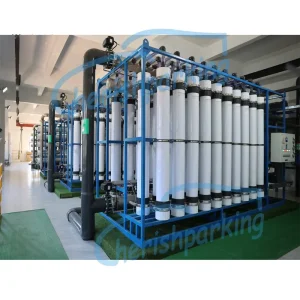
Mature processes such as filtration, ultrafiltration (UF), reverse osmosis (RO) and disinfection.
Q
What can the treated reclaimed water be used for?
Green irrigation, road cleaning, equipment washing, landscape water and toilet flushing.
Q
Does the effluent meet the relevant standards?
Yes, it stably meets the national reclaimed water reuse standards.
Q
Is the system easy to operate?
Yes, it supports automatic control with low manual intervention.
Q
What is the operation cost of the system?
Low, with energy-saving design and low daily maintenance cost.
 Cherish